“ The iron law of duty, hitherto the single principle of her life, here, too, silenced every other voice, and, silently, and warningly came back the remembrances of the past, still sleeping unforgotten in her inmost soul. Every bitter hour in which her childhood had been so rich, every tear which she had shed, every humiliation she had endured, the mother's dying bed, the picture of her never known, but yet passionately loved father--all, all passed vividly before her, and as these remembrances poured upon her, the girl's features grew hard and cold, till at last, with dark decision she arose. ”
E. Werner
Biographical details

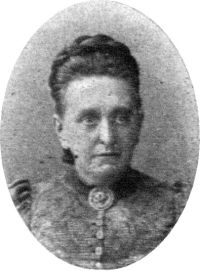
Elisabeth Bürstenbinder (1838–1918), writing under the pen name E. Werner, was a German novelist whose works examined themes of duty, love, and moral conflict with psychological depth and lyrical intensity. Her novels, including Vineta, the Phantom City, The Sign of Flame, and No Surrender, frequently portrayed individuals struggling with societal expectations and personal desires, merging romanticism with existential reflection.
Translated into English, her texts such as Fickle Fortune and The Alpine Fay demonstrate an interest in fate, identity, and the tension between self-determination and tradition. Through her extensive body of work, Bürstenbinder developed a unique voice that echoes the emotional and ethical intricacies of 19th-century European literature.
Quotes by E. Werner
“ She stroked the dark, curly hair back from the high forehead, and a shadow rested on her face."You have his brow," she said slowly, "but that is the only thing to remind of him; everything else belongs to me--to me alone. Every feature tells that you are wholly mine. I knew it would be so."Again she embraced him, overwhelming him with caresses, which Hartmut returned as passionately. It was an intoxication of happiness to him--like one of the fairy tales of which he had so often dreamed, and he gave himself up to the charm unquestioningly and unreservedly. ”
“ Hartmut dropped suddenly the more formal madame or baroness. "Men call it sin and punish it accordingly, without any premonition that such a punishment will lead to perfect happiness. To pass away in a flame of fire after one has enjoyed the highest earthly joys, and is yet surrounded by them in death. Ah! that is to die like a god—far better such a death than a long, stupid, humdrum existence. Eternal, undying love rises like a flaming brand to the heavens above, in defiance of mankind's sentence—do you not think such an ending is enviable?" ”