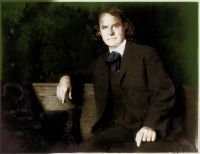
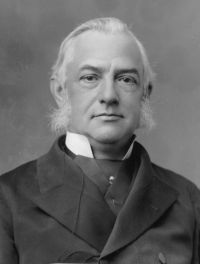
Charles Wheatstone

Definition and stakes

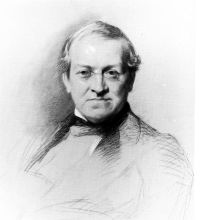
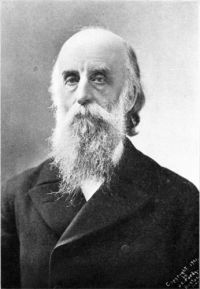
Portrait of Leslie Stephen Leslie Stephen Dictionary of National Biography… (1899)

WHEATSTONE, Sir CHARLES (1802–1875) , man of science and inventor, son of W. Wheatstone, a music-seller of Gloucester, was born at Gloucester in February 1802, and educated in a private school there. At the age of twenty-one he commenced business in London as a musical instrument maker. A few months after he contributed a paper to Thomson's ‘Annals of Philosophy’ on his early experiments on sound. Other papers followed, and among them was a description of his ‘kaleidophone.’ This consisted of steel wire of rectangular cross-section fixed to a heavy base and carrying a silver bead at the top.
Source: Wikisource

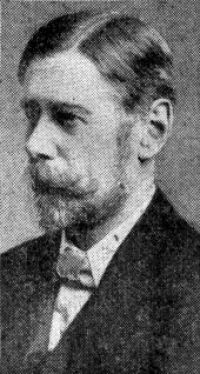
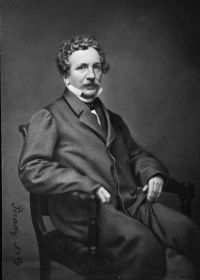
Portrait of Charles Wheatstone Charles Wheatstone Note relating to M. Foucault's new mechanical proof of the Rotation of the Earth… (1851)

A spiral spring wire, by means of which a slow vibration is obtained with a comparatively short length, is attached at the lower end to a pin fixed in the axis of the semicircle, so that the point of attachment may be the axis of rotation, and at the upper end it is fixed to a similar pin in a parallel position fixed to the rider.
Source: Wikisource

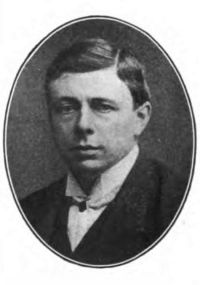
Portrait of Charles Wheatstone Charles Wheatstone Note relating to M. Foucault's new mechanical proof of the Rotation of the Earth… (1851)

When the rod or string is equally flexible in every direction, the plane of vibration given to it from any original impulse is constantly maintained whatever may be the velocity of rotation communicated to its point of support, provided the axis of vibration remains in the same position, or move only parallel to itself.
Source: Wikisource

Get perspective with Kwize: daily news enlightened by great literature