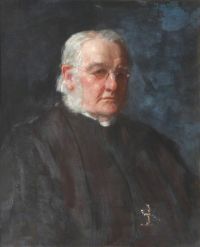
Edward Hyde, 1st Earl of Clarendon

Definition and stakes

Philip Chesney Yorke 1911 Encyclopædia Britannica, Volume 6… (1911)

A party of younger men of the king’s own age, more congenial to his temperament, and eager to drive the old chancellor from power and to succeed him in office, had for some time been endeavouring to undermine his influence by ridicule and intrigue. Surrounded by such general and violent animosity, Clarendon’s only hope could be in the support of the king.
Source: Wikisource

Philip Chesney Yorke 1911 Encyclopædia Britannica, Volume 6… (1911)

Clarendon wrote humbly to the king asking for pardon, and that the prosecution might be prevented, but Charles had openly taken part against him, and, though desiring his escape, would not order or assist his departure for fear of the Commons. Through the bishop of Hereford, however, on the 29th of November he pressed Clarendon to fly, promising that he should not during his absence suffer in his honour or fortune. Clarendon embarked the same night for Calais, where he arrived on the 2nd of December.
Source: Wikisource

Philip Chesney Yorke 1911 Encyclopædia Britannica, Volume 6… (1911)

The Sutherland Clarendon in the Bodleian library at Oxford contains several thousand portraits and illustrations of the History. The Life of Edward, earl of Clarendon . . . [and the] Continuation of the History . . ., the first consisting of that portion of the Life not included in the History, and the second of the account of Clarendon’s administration and exile in France, begun in 1672, was published in 1759, the History of the Reign of King Charles II. from the Restoration . .
Source: Wikisource

Get perspective with Kwize: daily news enlightened by great literature