“ With a lithe panther-like movement of his sinewy body the Arab slipped uppermost, his hands at the other’s throat. And conscious that he was fighting for his life, Carew put forward his utmost power to meet the strength he knew to be equal to his own. Locked in a mortal embrace that seemed to admit of only one ending they struggled with deadly purpose, writhing to and fro on the floor of the verandah until a sidelong jerk from one of them sent them over the edge and they rolled, still gripping fiercely, into the garden beneath. ”
Carew
Definition and stakes
The literary concept of "Carew" appears as a recurring character name in 19th- and early 20th-century fiction, embodying a range of characteristics from courage to contemplation. Authors such as E. M. Hull portray Carew as a physically imposing figure in The Desert Healer, engaged in a perilous struggle for survival, while E. F. Knight depicts him in A Desperate Voyage as a man torn between conflicting moral values, wrestling with his conscience in isolation.
B. L. Farjeon’s A Secret Inheritance emphasizes Carew’s emotional depth, presenting him as a cherished figure whose presence influences the perspectives of those around him. These differing depictions, covering themes of adventure, ethical conflict, and family ties, reveal Carew as a complex archetype, mirroring the period’s fascination with identity and the intricacies of human nature.
Quotes about “Carew”
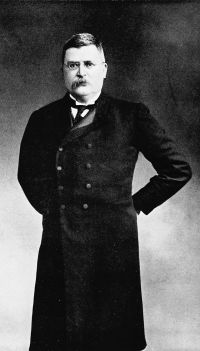 E. F. Knight,
A Desperate Voyage
E. F. Knight,
A Desperate Voyage
“ Carew stood on deck, and under the joyous influences of that bright morning a calm fell on his soul, and his conscience ceased to trouble him. There is a sort of magnetic relation between a man and his surroundings. Out at sea, far away from land, with nothing but pure air and pure water near, even a great villain is wont to forget that he himself is not pure as well. In London, as he walked through the crowded streets, Carew knew that he was constantly jostling against men as bad as himself. ”
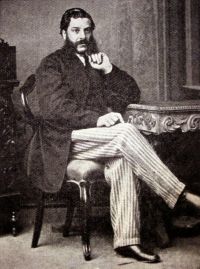 B. L. Farjeon,
A Secret Inheritance (Volume 3 of 3…
B. L. Farjeon,
A Secret Inheritance (Volume 3 of 3…
“ Carew, when he was here with me, said the air was peculiarly sweet, and I gather the impression from him. It is always so with one we love. I questioned myself whether I should impart to him what I am about to impart to you, but he appeared to be so much in need of rest that I decided not to agitate him. I trust he will forgive me when I make my confession to him to-morrow. ”