Stereoscope

Definition and stakes

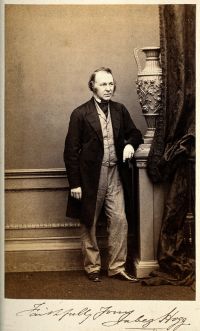
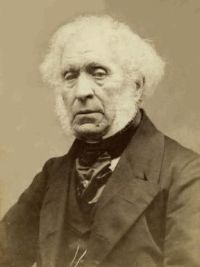
Portrait of David Brewster David Brewster,  The stereoscope (1856)

“ If we take a large picture for the stereoscope, we are compelled by pictorial truth to place it at a distance from the eye equal to the equivalent focal distance of the camera. Every picture in every camera has the same apparent magnitude as the object which it represents; whether it be a human figure, or the most distant landscape; and if we desire to see it in its true relief in the stereoscope, we must place it at a distance from the eye equal to the focal length of the lens, whether it be an inch or a foot high. There is, therefore, nothing gained by using large pictures. ”
Source: Gutenberg

Portrait of David Brewster David Brewster,  The stereoscope (1856)

“ In order to understand the theory and construction of the stereoscope we must be acquainted with the general structure of the eye, with the mode in which the images of visible objects are formed within it, and with the laws of vision by means of which we see those objects in the position which they occupy, that is, in the direction and at the distance at which they exist. ”
Source: Gutenberg

Portrait of David Brewster David Brewster,  The stereoscope (1856)

“ The reflecting stereoscope is inapplicable to the beautiful binocular slides which are now being taken for the lenticular stereoscope in every part of the world, and even if we cut in two those on paper and silver-plate, they would give, in the reflecting instrument, converse pictures, the right-hand part of the picture being placed on the left-hand side, and vice versa. ”
Source: Gutenberg

Get perspective with Kwize: daily news enlightened by great literature