Stereoscopy

Definition and stakes

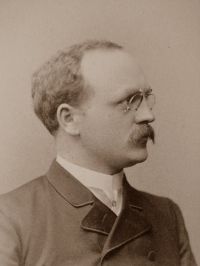
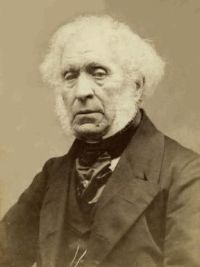
Portrait of David Brewster David Brewster,  The stereoscope (1856)

“ If we take a large picture for the stereoscope, we are compelled by pictorial truth to place it at a distance from the eye equal to the equivalent focal distance of the camera. Every picture in every camera has the same apparent magnitude as the object which it represents; whether it be a human figure, or the most distant landscape; and if we desire to see it in its true relief in the stereoscope, we must place it at a distance from the eye equal to the focal length of the lens, whether it be an inch or a foot high. There is, therefore, nothing gained by using large pictures. ”
Source: Gutenberg

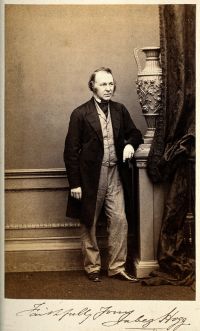
Various,  Notes and Queries, No. 209, October 29 1853

“ The right distance for the observer's place is 450 feet. If the cameras be placed two inches and a half apart, on one line parallel to the wall, the stereographs will be in true perspective for the two eyes, that is, all the planes at right angles to the plane of delineation will have two vanishing points, which, being merely two inches and a half apart, will, in the stereoscope, flow easily into one opposite the eye; whilst the plinth, coping, and all lines parallel to them, will be perfectly horizontal ”
Source: Gutenberg

Fulgence Marion,  The wonders of optics (1869)

“ The instrument first devised by Professor Wheatstone, was what is termed a reflecting stereoscope, and was expensive to make and cumbrous to use. It was modified by Sir David Brewster, by the substitution of prisms for reflectors, and was thus made cheaper and more portable. The refracting form of stereoscope is so familiar to most people, that it really needs no description. It will only be necessary to mention that the prisms used in the eye-pieces are made by cutting a double convex lens in two, and reversing the halves. ”
Source: Wikisource

Get perspective with Kwize: daily news enlightened by great literature