“ In the speculation of his own good parts, his eyes, like a drunkard's, see all double, and his fancy, like an old man's spectacles, make a great letter in a small print. He imagines every place where he comes his theater, and not a look stirring but his spectator ”
Spectacles
Definition and stakes
The concept of "spectacles" includes both actual optical instruments and symbolic portrayals of human experience. From John Earle's metaphor of spectacles altering perception to Guy Debord's examination of society as a "mass of spectacles," the theme highlights varied interpretations. Romain Rolland focused on the shared emotional impact of theatrical displays, while Leo Tolstoy investigated the ethical consequences of passive watching.
These viewpoints, drawn from literature, philosophy, and theater, illustrate how spectacles—whether glasses or performances—shape our interaction with the world. The relationship between physical sight and symbolic expression remains key to grasping their lasting cultural significance.
Quotes about “spectacles”
 Romain Rolland,
The People's Theater
(1918)
Romain Rolland,
The People's Theater
(1918)
“ Strictly speaking, there are no popular spectacles. The theaters of antiquity held as many as eighty thousand spectators at one time. ... Think of the power in that great assemblage, when you consider the influence of one man on another and the immediate transmission of emotion in such crowds. ”
Guy Debord, The Society of the Spectacle — Chapter 1… (1967)
“ In societies dominated by modern conditions of production, life is presented as an immense accumulation of spectacles. Everything that was directly lived has receded into a representation. ”
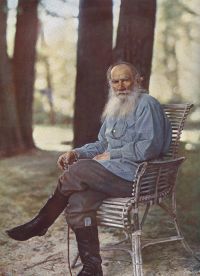 Leo Tolstoy,
Anna Karenina
(1877)
Leo Tolstoy,
Anna Karenina
(1877)
“ “There are two aspects,” Alexey Alexandrovitch resumed: “those who take part and those who look on; and love for such spectacles is an unmistakable proof of a low degree of development in the spectator, I admit, but....” ”
R. Austin Freeman, The Mystery of 31 New Inn (1913)
“ I had certainly seen through those spectacles as clearly as if they had been plain window-glass; and they had certainly given an inverted reflection of the candle-flame like that thrown from the surface of a concave lens. Now they obviously could not be both flat and concave; but yet they had the properties peculiar to both flatness and concavity. And there was a further difficulty. If I could see objects unaltered through them, so could Mr. Weiss. But the function of spectacles is to alter the appearances of objects, by magnification, reduction or compensating distortion. ”
 G. P. R. James,
The Forgery; or, Best Intentions
G. P. R. James,
The Forgery; or, Best Intentions
“ It one could really be a spectator, a mere spectator, of what is passing in the world around us, without taking part in the events, or sharing in the passions and the actual performance on the stage; if we could sit ourselves down, as it were, in a private box of the world's great theatre, and quietly look on at the piece which is playing, no more moved than is absolutely implied by sympathy with our fellow-creatures, what a curious, what an amusing, what an interesting spectacle would life present! ”
“ To them, therefore, with the exception of a few startling incidents of real life, the theatre is the only channel through which are ever brought the great sympathies of the world of thought beyond their immediate ken. And thirdly, it follows from all this that the stage is, intellectually and morally, to all who have recourse to it, the source of some of the finest and best influences of which they are respectively susceptible. To the thoughtful and reading man it brings the life, the fire, the color, the vivid instinct, which are beyond the reach of [34] study. ”
 William Archer,
Play-Making: A Manual of Craftsmanship
William Archer,
Play-Making: A Manual of Craftsmanship
“ I said, "is the accidental relish of a single night; whereas the essential and abiding pleasure of the theatre lies in foreknowledge. In relation to the characters in the drama, the audience are as gods looking before and after. Sitting in the theatre, we taste, for a moment, the glory of omniscience. With vision unsealed, we watch the gropings of purblind mortals after happiness, and smile at their stumblings, their blunders, their futile quests, their misplaced exultations, their groundless panics. ”
 Johann Wolfgang von Goethe,
The Works of J. W. von Goethe
Johann Wolfgang von Goethe,
The Works of J. W. von Goethe
“ As this great society has among its members organ-builders, sculptors, and gilders, so, assuredly, there are some who patronise the stage with learning and taste; and, just as they decorate their churches with appropriate ornaments, these clear-sighted men take advantage of the world's sensual eye by an imposing theatre. ”
 David Hume,
An Enquiry Concerning the Principles of Morals
(1751)
David Hume,
An Enquiry Concerning the Principles of Morals
(1751)
“ Every Movement of the Theatre, by a skillful Poet, is communicated, as it were by Magic, to the Spectators, who weep, tremble, resent, rejoice, and are enflam'd with all the Variety of Passions, which actuate the several Personages of the Drama. ”
F. Marion Crawford, Fair Margaret: A Portrait
“ But in the scale of emotion and excitement the theatre comes next to fighting, whether you be the author of the play or opera to be given for the first time before the greatest and most critical audience in the world, or the actor, or actress, or singer, who has not yet been heard or seen and of whom wonders are expected on the great night. ”
Johann Wolfgang von Goethe,
The Works of J. W. von Goethe
(1901–1902)
“ The theatre has often been at variance with the pulpit: they ought not, I think, to quarrel. How much is it to be wished, that in both the celebration of nature and of God were entrusted to none but men of noble minds! ”
 Ronald Reagan,
Proclamation 5497
Ronald Reagan,
Proclamation 5497
“ Theatre lets us stand apart from the flow of life: to feel pity and understanding and empathy; to smile at human foibles and to weep at human tragedies. Theatre is an art form for all seasons and all moods. ”
 John Cassell,
Cassell's Illustrated History of England
(1865)
John Cassell,
Cassell's Illustrated History of England
(1865)
“ History thrusts upon the stage at once, or in quick and continued succession, tragedy, and comedy, and farce; and, as we weep, and laugh, and wonder, we must not forget that we are in the theatre, not of fancy, but of truth, and that every event, however slight, every entrance and every exit, possesses a real meaning and a real importance. ”
Johann Wolfgang von Goethe,
The Works of J. W. von Goethe
“ In the evening they go into the theatre, and see and hear the life of the day artificially put together, prettily set off, interwoven with a story, removed from reality by the masks, and brought near to it by manners In all this they take a childish delight, and again shout and clap, and make a noise. ”
Apuleius, The Apologia and Florida of Apuleius of Madaura
“ Moreover, in a theatre we must consider, not the marble of its pavements, not the boards of the stage, nor the columns of the back-scene, nay, nor yet the height of its gables, the splendour of its fretted roofs, the expanse of its tiers of seats; we need not call to mind that this place is sometimes the scene for the foolery of the mime, the dialogue of comedy, the sonorous rant of tragedy, the perilous antics of the rope-walker, the juggler's sleight of hand, the gesticulation of the dancer, with all the tricks of their respective arts that are displayed before the people by other artists. ”
Robert Chambers, Spirit of Chambers's Journal (1834)
“ And not only does literature compete with the stage. Music, and other accomplishments of private life, are also now resorted to, for the purpose of furnishing an innocent amusement to the family circle—an amusement less attractive, perhaps, than the theatre, which, with all its errors, has still a powerful inherent charm, but preferred, nevertheless, as making up in simplicity, harmlessness, and cheapness, what it wants in the power of excitement. ”
 Grace S. Richmond,
Red and Black
Grace S. Richmond,
Red and Black
“ It is not with the stage performance that we are most concerned, but with that other play, quite out of sight of the audience in the little theatre that night, which is to us more interesting than the scenes they acted behind the footlights. ”
Guy Debord, The Society of the Spectacle — Chapter 9… (1967)
“ Imprisoned in a flattened universe bounded by the screen of the spectacle that has enthralled him, the spectator knows no one but the fictitious speakers who subject him to a one-way monologue about their commodities and the politics of their commodities. The spectacle as a whole serves as his looking glass. ”
 Brander Matthews,
A Book About the Theater
Brander Matthews,
A Book About the Theater
“ Any consideration of dramatic literature, apart from the actual conditions of performance, apart from the special theater for which any given play was composed, and to the conditions of which it had, perforce, to conform, is bound to be one-sided, not to say sterile. The masterpieces of dramatic literature were all of them written to be performed by actors, in a theater, and before an audience. ”
 George Santayana,
Soliloquies in England, and Later Soliloquies
George Santayana,
Soliloquies in England, and Later Soliloquies
“ Nature, like a theatre, offers a double object to the mind. There is in the first place the play presented, the overt spectacle, which is something specious and ideal; and then there is something material and profound lying behind and only symbolically revealed, namely, the stage, the actors, and the author. ”
 William De Witt Hyde,
The Five Great Philosophies of Life
William De Witt Hyde,
The Five Great Philosophies of Life
“ The theatre, which embodies so distinctively the peculiar essence of play that its performances have appropriated the name, takes us in a couple of hours through the epitomised experience of many persons extending over many years in circumstances far removed from our individual lives. Poetry, novels, biographies, histories, painting, music, and all the forms of art perform for us this same function. ”
Romain Rolland,
The People's Theater
(1918)
“ Before I die I wish to see a spirit of national fraternity in the theater ... a drama simple and vigorous played throughout the countryside, where the energy of talent, the creative power which lies in the heart, and the youthful imagination of an entirely new people shall do away with mere physical adjuncts, sumptuous stage-settings and costumes, without which the feeble dramatists of this outworn age cannot take a step. ... What is the theater? ”
William Duthie, A Tramp's Wallet
“ The play begins; with the deepest earnestness the audience listen, and, crowded as they are, preserve the utmost quiet. The glorious drama scene by scene unfolds itself, and passage by passage we recognise the beauties of our great poet. ”
 Herbert George Wells,
The Country of the Blind and Other Stories
(1913)
Herbert George Wells,
The Country of the Blind and Other Stories
(1913)
“ The phenomenal unnaturalness of acting is a thing discounted in the minds of most people by early visits to the theatre. They get used to the fantastic gestures, the flamboyant emotions, the weird mouthings, melodious snortings, agonising yelps, lip-gnawings, glaring horrors, and other emotional symbolism of the stage. ”

“ At the theatre you used to see heroes, abandoned to depths of woe, making the stage re-echo with their wild cries, lamenting like women, weeping like children, and thus securing the applause of the audience. ”
Samuel Finley Breese Morse, Samuel F. B. Morse, His Letters and Journals
“ It is a religion of the imagination; all the arts of the imagination are pressed into its service; architecture, painting, sculpture, music, have lent all their charm to enchant the senses and impose on the understanding by substituting for the solemn truths of God's Word, which are addressed to the understanding, the fictions of poetry and the delusions of feeling. The theatre is a daughter of this prolific mother of abominations, and a child worthy of its dam. ”
Various, Blackwood's Edinburgh Magazine - Volume 55…
“ The theatre was fitted up with the taste of a people more essentially theatrical than any other in the world. For not merely the eye, but the tongue, is theatrical; and not merely the stage, but every portion of private life. ”
 Edward S. Van Zile,
That Marvel—The Movie
Edward S. Van Zile,
That Marvel—The Movie
“ I have acquired the habit of late of patronizing the theatre that advertises a picture-play derived from some novel, old or new, and recounts, by means of the silent drama, a story worthy of repetition. ”
 H. C. Andersen,
O. T., A Danish Romance
H. C. Andersen,
O. T., A Danish Romance
“ The theatre is here, as well as there, the most powerful organ of the people’s life. It has the greatest influence, and ours stands high, very high, when one reflects in what different directions it must extend its influence. ”
 Sir Sidney Lee,
Shakespeare and the Modern Stage…
Sir Sidney Lee,
Shakespeare and the Modern Stage…
“ Every stage representation of a play requires sufficient scenery and costume to produce in the [Pg 5] audience that illusion of environment which the text invites. Without so much scenery or costume the words fail to get home to the audience. In comedies dealing with concrete conditions of modern society, the stage presentation necessarily relies to a very large extent for its success on the realism of the scenic appliances. ”
Henry James, A Small Boy and Others
“ Our experience of the theatre for instance, which had played such a part for us at home, almost wholly dropped in just the most propitious air: an anomaly indeed half explained by the fact that life in general, all round us, was perceptibly more theatrical. ”
 B. L. Farjeon,
The Duchess of Rosemary Lane: A Novel
B. L. Farjeon,
The Duchess of Rosemary Lane: A Novel
“ As in a theatre, after the overture is played, the first thing shown to the audience is the scene in which the action of the drama commences, so let our first words be devoted to the locality in which the story opens. ”
 Samuel Taylor Coleridge,
Shakespeare, Ben Jonson, Beaumont and Fletcher
Samuel Taylor Coleridge,
Shakespeare, Ben Jonson, Beaumont and Fletcher
“ And here it will be necessary to say a few words on the stage and on stage-illusion. A theatre, in the widest sense of the word, is the general term for all places of amusement through the ear or eye, in which men assemble in order to be amused by some entertainment presented to all at the same time and in common. Thus an old Puritan divine says:—“Those who attend public worship and sermons only to amuse themselves, make a theatre of the church, and turn God's house into the devil's. ”
Sir Herbert Beerbohm Tree, Henry VIII and His Court
“ Though the archæologist with symbolic leanings may cry out, the theatre is primarily for those who love the drama, who love the joy of life and the true presentation of history. It is only secondarily for those who fulfil their souls in footnotes. ”
 Floyd Dell,
Sweet and Twenty: A Comedy in One Act
Floyd Dell,
Sweet and Twenty: A Comedy in One Act
“ The work satisfies a long-felt want for a handy collection of the choicest plays produced by the art theaters all over the world. It is a complete repertory for a little theater, a volume for the study of the modern drama, a representative collection of the world's best short plays. ”
Samuel Langhorne Clemens, The Overland Monthly (1868)
“ Perhaps no other theatre in the world could present so many noteworthy and exciting features—interesting from the nature of the events with which they were associated; and forming themselves a part of the remarkable political drama upon which the curtain has so recently fallen in sadness and gloom. ”
“ But an art, somewhat analogous to, but infinitely surpassing, that displayed in the manipulation of the most skilfully constructed and most complicated magic lanterns, enables the conductors of the theatre to present upon the stage a truly living and moving picture of any scene they desire to exhibit. ”
Thames Williamson, Problems in American Democracy
“ THE THEATER.—The theatre has always been a vital influence in man's aesthetic and emotional life. Drama, opera, comedy, and burlesque are variant forms, but they are alike in that they influence the audience. In the last decade the moving picture has greatly increased the power and influence of the theatre. ”
 Omar Khayyam,
Rubáiyát of Omar Khayyám (Le Gallienne…
(1902)
Omar Khayyam,
Rubáiyát of Omar Khayyám (Le Gallienne…
(1902)
“ Though it is ' literature ' throughout, it is never the literature of the closet, but always the literature of the theatre, with the rapid action, the marked con- trasts, the fierce beating passion, the broad effects proper to the theatre. ”
 Frances Eleanor Trollope,
A Charming Fellow, Volume I
Frances Eleanor Trollope,
A Charming Fellow, Volume I
“ And although a big theatre full of spectators may be very exhilarating to the object of public attention who performs in it, a big theatre, practically barren of spectators—for, of course, the only real spectators are the spectators who look at us—is apt to oppress the mind with a sense of desertion. ”
Grace S. Richmond,
The Twenty-Fourth of June: Midsummer's Day
“ The audience, as the play began, was in the customary benevolent mood of audiences beholding amateur productions, ready to see good if possible, anxious to show favour to all the young actors and to praise without discrimination, aware of the proximity of proud fathers and mothers. ”
 Gilbert Abbott À Beckett,
The Comic History of England
Gilbert Abbott À Beckett,
The Comic History of England
“ Following the example of the illustrious model, whose style we consider it no humility, but rather an audacity, to imitate, we will suppose the recital to be made some time after the event has occurred, and we will imagine some veteran stage manager giving directions for, or superintending the rehearsal of, a grand dramatic representation of one of the grandest and—if we may be allowed the privilege of a literary smasher in coming a word—the dramaticest battles in English history. ”
 Jules Verne,
Around the Moon — Chapter VIII
(1873)
Jules Verne,
Around the Moon — Chapter VIII
(1873)
“ Fancy parties where the room was saturated with this heroic fluid, theaters where it should be kept at high pressure; what passion in the souls of the actors and spectators! what fire, what enthusiasm! ”
