Kaleidoscope

Definition and stakes

Frederick C. Bakewell,  Great Facts

“ No invention, on being first brought out, created so general a sensation as the Kaleidoscope. Every person, who could buy or make one, had a Kaleidoscope. Men, women, and children—rich and poor; in houses or walking in the streets; in carriages, or on coaches—were to be seen looking into the wonder-working tube, admiring the beautiful patterns it produced, and the magical changes which the least movement of the glass occasioned. ”
Source: Gutenberg

Anonymous,  Invention and Discovery: Curious Facts and Characteristic Sketches

“ COMBINATIONS OF THE KALEIDOSCOPE. The system of endless changes is one of the most astonishing properties of the Kaleidoscope. With a number of loose objects—pieces of glass, for example,—it is possible to reproduce any figure we have admired, when it is once lost. Centuries may elapse before the same combination returns; if the objects, however, are placed in the cell so as to have very little motion, the same figure may be recalled, and if actually fixed, the same pattern will return in every evolution of the object-plate. ”
Source: Gutenberg

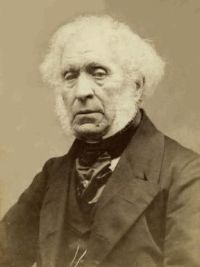
Portrait of David Brewster David Brewster,  The kaleidoscope (1870)

“ When the Kaleidoscope is directed to the sky, or to a luminous object, such as a gas flame, or the flame of a candle, a uniform tint is seen through the pieces of glass, or other transparent fragments that have flat surfaces, and there is a certain degree of hardness in their outlines. When the instrument is not opposite the flame, but directed to one side of it, the light enters the transparent fragments obliquely, and a much finer effect is produced. The pattern, indeed, changes very considerably by making the Kaleidoscope move round the flame. ”
Source: Gutenberg

Get perspective with Kwize: daily news enlightened by great literature