Capital expenditure

Definition and stakes

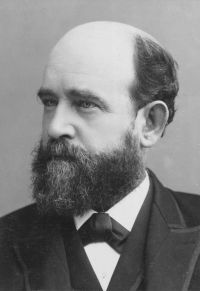
Portrait of John Stuart Mill John Stuart Mill,  Principles of Political Economy (1871)

“ These loans, being drawn from capital (in lieu of taxes, which would generally have been paid from income, and made up in part or altogether by increased economy) must, according to the principles we have laid down, tend to impoverish the country: yet the years in which expenditure of this sort has been on the greatest scale, have often been years of great apparent prosperity: the wealth and resources of the country, instead of diminishing, have given every sign of rapid increase during the process, and of greatly expanded dimensions after its close. ”
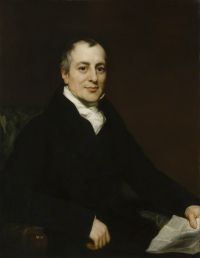
Source: Wikisource

Portrait of John Stuart Mill John Stuart Mill,  Principles of Political Economy (1871)

“ In such countries, the government may take any moderate portion of the capital of the country and expend it as revenue, without affecting the national wealth: the whole being either drawn from that portion of the annual savings which would otherwise be sent abroad, or being subtracted from the unproductive expenditure of individuals for the next year or two, since every million spent makes room for another million to be saved before reaching the overflowing point. ”
Source: Wikisource

Roy B. Kester,  Accounting theory and practice… (1922)

“ In this connection it may be pointed out that the cost of all assets subject to depreciation may well be looked upon as deferred charges to operation, some portion of that cost being charged off at the close of each fiscal period. “So we see that capital expenditures, as distinguished from expenses, are at last an arbitrary conception. It begins with the idea that certain expenditures have an efficiency which reaches over many earning periods extending indefinitely into the future. But nothing physical would last so long, and its earning power might have even less permanence. ”
Source: Gutenberg

Get perspective with Kwize: daily news enlightened by great literature