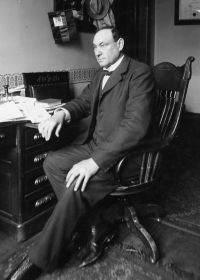
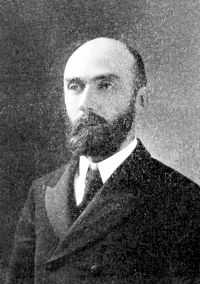
Edwin M. Bruce

Biographical details

Edwin M. Bruce,  Detection of the Common Food Adulterants

“ Salicylic acid, benzoic acid, and saccharin are used to preserve fruits. The last is also added as a sweetener instead of sugar. Many fruit products lose their color with age, and to give them a lasting color they are treated with a coal-tar dye, cochineal, acid magenta, or caramel.
A very small per cent of the jams and jellies sold are strictly pure. These cheap products are made up principally of apple juice and commercial glucose; artificial essences are added to imitate the real flavor.
”
Source: Gutenberg

Edwin M. Bruce,  Detection of the Common Food Adulterants

“ The oil of true coffee prevents the particles from being readily soaked, and so they float for some time. Chicory and most of the other adulterants of coffee contain no oil, but do contain caramel, which is quickly extracted by the water producing a zone of brown color about such particles. They become soaked and quickly sink. The liquid containing pure coffee diffuses uniformly without coloring the water to any perceptible degree. Chicory and similar roots give a dark brown, turbid infusion. Roasted cereals do not impart so distinct a color to water. ”
Source: Gutenberg

Edwin M. Bruce,  Detection of the Common Food Adulterants

“ No class of foods on the market has less need for antiseptics than canned goods, yet their use is rather common. Products thus treated are easier canned and are not so apt to spoil. The chemicals used as preservatives are sulfurous acid, and the sulfites, salicylic acid and saccharin, benzoic acid, and sometimes formaldehyde. Sulfurous acid is used to bleach such foods as canned corn. Saccharin possesses some antiseptic properties, but its main use is as a sweetener. Alum is used to make pickles hard and crisp. ”
Source: Gutenberg

Get perspective with Kwize: daily news enlightened by great literature