Residue

Definition and stakes

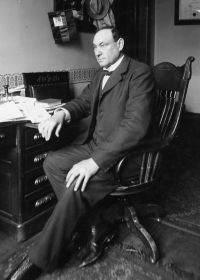
Portrait of Thomas C. Chamberlin Thomas C. Chamberlin,  Geology (1906)

“ But, as a matter of fact, a large amount of organic matter has not gone back completely to the inorganic state, and this residue constitutes a factor of no small importance in the geological record.
The organic residue.—There is a certain portion of vegetation that is not consumed by animals or by other plants, and that escapes combustion641 and all kinds of ordinary decay, and this constitutes a part of the organic residue. Animals never completely oxidize all the organic matter they take into their systems; their bodies never entirely consume themselves.
”
Source: Gutenberg

Various,  Scientific American Supplement…

“ After thoroughly mixing the contents, fifty grammes were weighed off and incinerated in a porcelain dish of suitable size. The residue was treated with a large excess of concentrated hydrochloric acid, evaporated to dryness, moistened with hydrochloric acid, water was added, and the mass was filtered and washed, the insoluble matter being all washed upon the filter. After drying the filter with its contents, the whole was again incinerated in a porcelain dish and the residue treated as before. The solution thus obtained was properly diluted and saturated with hydrogen sulphide. ”
Source: Gutenberg

Various,  Scientific American Supplement…

“ The residue dried at 212° Fahrenheit is weighed with a filter, after which that of the latter is deducted. The loss of weight experienced is essentially equal to the loss of the wool fiber. If the filtrate is saturated with hydrochloric acid, the dissolved wool fiber separates again, and after having been collected upon a weighed filter, it may be weighed and the quantity ascertained. ”
Source: Gutenberg

Get perspective with Kwize: daily news enlightened by great literature