Porosity

Definition and stakes

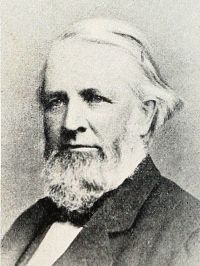
Portrait of Harvey Washington Wiley Harvey Washington Wiley,  Principles and practices of agricultural analysis (1894)

“ If a soil be cemented together into a homogeneous mass, its porosity sinks to a minimum; if it be composed, however, of numerous fine particles, each preserving its own physical condition, the porosity of the soil will rise to a maximum. The porosity of a soil may be judged very closely by the percentage of fine particles it yields by the process of silt analysis to be described further on. In general, the more finely divided the particles of a soil, the greater its fertility. ”
Source: Gutenberg

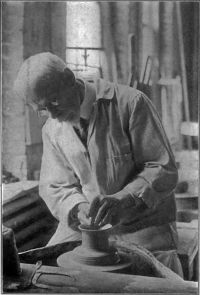
Portrait of Charles Fergus Binns Charles Fergus Binns,  The Potter's Craft: A Practical Guide for the Studio and Workshop

“ Porosity is caused by the sand in the clay. Any kind of sand will produce porosity but the effect differs with the condition of the sand. Coarse sand is more effective than fine sand. More sand will, of course, cause greater porosity.
Vitrification or densification is due to the feldspar or fusible sand. This also varies with the condition. A fine-grained feldspar will produce vitrification more easily than the same amount of coarse feldspar.
”
Source: Gutenberg

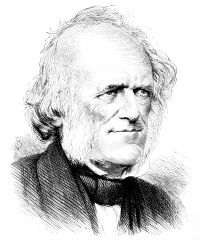
W. Mattieu Williams,  Popular Science Monthly (1884)

“ Lightly-baked loaves shrink a little in dimensions in becoming stale, and partly regain the loss on reheating, but this difference only exaggerates the apparent paradox of varying porosity, as the diminished bulk of a given quantity of material displays increased porosity, and the increase of total dimensions accompanies the diminished porosity.
A reconciliation of this paradox may be obtained by careful examination of the structure of the crumb. This will show that the larger or decidedly visible pores are cells having walls of somewhat silky appearance.
”
Source: Wikisource

Get perspective with Kwize: daily news enlightened by great literature