Groundwater

Definition and stakes

Various,  Popular Science Monthly (1908)

“ The rainfall may be regarded as an inherited asset, the soil is clearly an inherited asset, even a little soil-removal is an advantage, but reckless soil-wastage is a serious error. Soils are the product of the atmosphere and its waters modifying the rock surface. When they have aided the air in producing soil by rock decay, the atmospheric waters may pass either into plants or back to the surface through the soil and out by evaporation, or they may pass on down to the groundwaters and thence into the streams, furnishing there the basis for water-foods, for power and for navigation. ”

Source: Wikisource

1911 Encyclopædia Britannica, Volume 8… (1911)

“ The roots of plants require both air and warmth. A deep stratum through which water can percolate, but in which it can never stagnate, is therefore necessary. A waterlogged soil is impenetrable by air, and owing to the continuous process of evaporation and radiation, its temperature is much below that of drained soil. The surface of the water in the supersaturated soil is known as the “water-table” and is exemplified in water standing in a well. Water will rise in clay by capillarity to a height of 50 in., in sand to 22 in. ”
Source: Wikisource

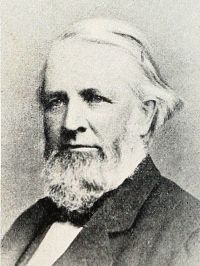
Portrait of George E. Waring George E. Waring,  Draining for Profit, and Draining for Health

“ Its fresh air, and the air which follows the descent of the water-table, carries oxygen to the organic and [pg 025] mineral parts of the soil, and hastens the rust and decay by which these are prepared for the uses of vegetation. The water itself supplies, by means of their power of absorption, the moisture which is needed by the particles of the soil; and, having performed its work, it goes down to the level of the water below, and, swelling the tide above the brink of the dam, sets the drains running, until it is all removed. ”
Source: Gutenberg

Get perspective with Kwize: daily news enlightened by great literature