Laterite

Definition and stakes

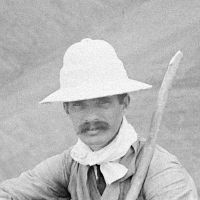
Portrait of John Smith Flett John Smith Flett,  1911 Encyclopædia Britannica (1911)

“ These are usually rich in iron. The superficial layers of laterite deposits are often indurated and smooth black or dark-brown crusts occur where the clays have long been exposed to a dry atmosphere; in other cases the soft clays are full of hard nodules, and in general the laterite is perforated by tubules, sometimes with veins of different composition and appearance from the main mass. The depth of the laterite beds varies up to 30 or 40 ft., the deeper layers often being soft when the surface is hard or stony; the transition to fresh, sound rock below may be very sudden. ”
Source: Wikisource

A. C. Burnell,  Hobson-Jobson

“ The most proper English name would be Laterite, from Lateritis, the appellation that may be given it in science."—Buchanan, Mysore, &c., ii. 440-441.
1860.—"Natives resident in these localities (Galle and Colombo) are easily recognisable elsewhere by the general hue of their dress. This is occasioned by the prevalence along the western coast of laterite, or, as the Singhalese call it, cabook, a product of disintegrated gneiss, which being subjected to detrition communicates its hue to the soil."—Tennent's Ceylon, i. 17.
”
Source: Gutenberg

Various,  Encyclopaedia Britannica, 11th Edition…

“ Kankar is also known and worked in British East Africa. The clay called cabook in Ceylon is essentially a variety of laterite. Common laterite contains very little lime, and it seems that in districts which have an excessive rainfall that component may be dissolved out by percolating water, while kankar, or calcareous laterite, is formed in districts which have a smaller rainfall. In India also a distinction is made between “high-level” and “low-level” laterites. The former are found at all elevations up to 5000 ft. and more, and are the products of the decomposition of rock in situ ”
Source: Gutenberg

Get perspective with Kwize: daily news enlightened by great literature