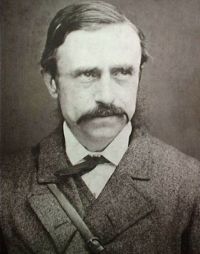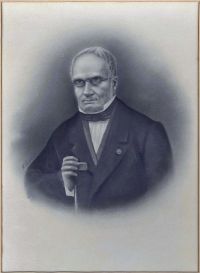
Édouard Lartet

Biographical details

Portrait of Édouard Lartet Édouard Lartet,  ../../ (1862)

“ In a chalk country, such as that through which the Somme flows, each cubic foot of flint, gravel or sand, represents the removal of at the very least twenty cubic feet of chalk, all of which, as we have already seen, must have been removed from the present area of drainage. In considering, therefore, the formation of these upper and older gravels, we must not picture to ourselves the original valley as it now is, but must, in imagination, restore all that immense mass of chalk which has been destroyed in the formation of the lower level gravels and sands. ”
Source: Wikisource

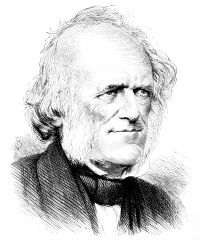
Portrait of Édouard Lartet Édouard Lartet,  ../../ (1862)

“ From finding the hatchets in the gravel up to a level of a hundred feet, it is probable that he dates back in Northern France almost, if not quite, as long as the rivers themselves. The face of the country must have been indeed unlike what it is now. Along the banks of the rivers ranged a savage race of hunters and fishermen, and in the forests wandered the mammoth, the two-horned, woolly, rhinoceros, a species of tiger, the musk ox, the reindeer, and the urus. ”
Source: Wikisource

Portrait of Édouard Lartet Édouard Lartet,  ../../ (1862)

“ No one can properly appreciate the time required who has not stood on the heights of Liercourt, Picquigny, or on one of the other points overlooking the valley: nor, I am sure, could any geologist return from such a visit without an overpowering sense of the change which has taken place, and the enormous time which must have elapsed since the first appearance of man in Western Europe. ”
Source: Wikisource

Get perspective with Kwize: daily news enlightened by great literature