Summary

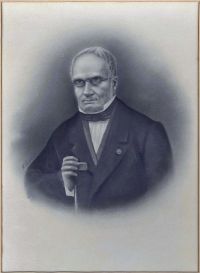
Portrait of Édouard Lartet Édouard Lartet Natural History Review: a quarterly journal of biological science (1862)

Measurements taken from the bones of so many individuals, would have afforded, to some extent, the means of deducing the average stature and proportions of this unknown race; and from the fragments of the face and skull, indications of some value, respecting the general form of the head, might also have been obtained. But unfortunately no one at Aurignac, not even the sexton, after an interval of eight years, retained any recollection of the precise spot at which these human remains had been deposited in a oommon trench.
Source: Wikisource

Portrait of Édouard Lartet Édouard Lartet Natural History Review: a quarterly journal of biological science (1862)

It is obvious, in fact, that nothing has been disturbed, and that, not only have a simple slab of stone a few centimetres in thickness, and a thin covering of loose earth, sufficed to preserve intact the sepulchre itself, but also that outside the cave, the relics of the funeral repasts and the various implements and arms left by the human inhabitants have not been disturbed.
Source: Wikisource

Portrait of Édouard Lartet Édouard Lartet Natural History Review: a quarterly journal of biological science (1862)

The rarity of the common Deer and of the Irish Elk, represented at Aurignac, each by the remains of a single individual, might be explained perhaps by the great abundance of those of the Reindeer. We know that in a wild state, antipathies exist between certain closely allied species, or sometimes between species belonging to the same genus, which lead them to inhabit perfectly distinct districts.
Source: Wikisource

Get perspective with Kwize: daily news enlightened by great literature