Summary

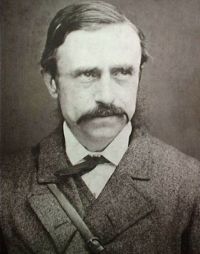
Portrait of William Boyd Dawkins William Boyd Dawkins Quarterly Journal of the Geological Society of London (1877)

Nor am I aware of any other cave which offers proof of the presence of Man in this country before or during the Glacial period. Fixing my eyes upon the Pleistocene fauna only, I find that that portion of it to which Man belongs (the Arctic division) arrived in Britain before the deposit of the Boulder-clays, and lived here afterwards, and that therefore there are a priori grounds for the belief that Man also arrived at the same time.
Source: Wikisource

Portrait of William Boyd Dawkins William Boyd Dawkins Quarterly Journal of the Geological Society of London (1871)

The presence in Great Britain of a creature adapted for enduring the severity of an Arctic winter, and not now found in any hot regions, along with the Rein-deer, Lemming, and Musk-Sheep, implies that the pleistocene winters were of an Arctic severity—just as the Hippopotamus, found under precisely the same conditions, and associated with the same group of animals, points to a hot summer like that which obtains on the Lower Volga.
Source: Wikisource

Portrait of William Boyd Dawkins William Boyd Dawkins Quarterly Journal of the Geological Society of London (1877)

He noticed the resemblance of the quartzite implements to those of the neighbourhood of Toulouse. With regard to the earliest appearance of man in this country, Mr. Evans remarked that, if there was evidence of his presence in glacial or preglacial times, he must have existed previously somewhere else under a milder climate. This, he thought, was probable; but he had not yet met with any conclusive evidence of the fact, and he was glad to find that the determination of the supposed human fibula from the Victoria Cave was so doubtful that it may safely be rejected.
Source: Wikisource

Get perspective with Kwize: daily news enlightened by great literature