Toulouse

Definition and stakes

by Henry James,  A Little Tour In France — Chapter XXI

“ It has fallen from the state of a noble residence of the sixteenth century to that of a warehouse and a set of offices; but a certain dignity lingers in its melancholy court, which is divided from the street by a gateway that is still imposing, and in which a clambering vine and a red Virginiacreeper were suspended to the rusty walls of brick stone.
The most interesting house at Toulouse is far from being the most striking.
”
Source: Wikisource

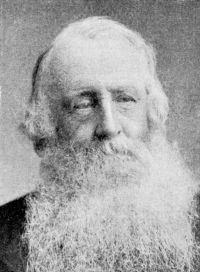
Portrait of Edith Wharton Edith Wharton,  A Motor-Flight Through France (1908)

“ Saint Sernin, the great church of Toulouse, is noble enough in line, and full of interest as marking the culmination of French Romanesque; but compared with the brick churches of northern Italy it seems struck with aridity, parched and bleached as a skeleton in a desert. The Capitoul, with its frivolous eighteenth-century front, has indeed more warmth and relief than any other building in Toulouse; but meanly surrounded by shabby brick houses, it seems to await in vain the development of ramps and terraces that should lead up to its long bright façade. ”
Source: Wikisource

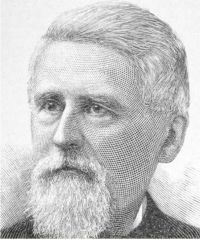
Elise Whitlock Rose,  Cathedrals and Cloisters of the South of France…

“ This is the energy, however, which has made Toulouse a rich, opulent city,—a city with broad boulevards, open squares, and fine buildings, and a city of the gay Renaissance rather than of the stern Middle Ages. Yet for Toulouse the Middle Ages were a dark time. What could be gotten by the sword was taken by the sword, and even the mind of man, in that gross age, was forced and controlled by the agony of his body. ”
Source: Gutenberg

Get perspective with Kwize: daily news enlightened by great literature