Basalt

Definition and stakes

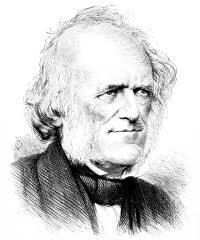
Portrait of James George Frazer James George Frazer,  The Belief in Immortality and the Worship of the Dead…

“ There is, however, a startling boldness in the towering piles of basalt, often heaped in picturesque confusion near the source or margin of some crystal stream that flows in silence at their base, or plashes purling over the rocks that obstruct its bed; and there is the wildness of romance about the deep and lonely glens, from which the mountains rise like the steep sides of a natural amphitheatre till they seem to support the clouds that rest upon their summits. ”
Source: Gutenberg

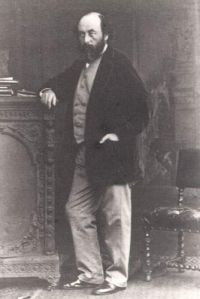
Portrait of James Geikie James Geikie,  Geology

“ Basalt is a dark or almost black compact homogeneous rock, composed of felspar and augite with magnetic iron. An olive-green mineral called olivine is very frequently present. The coarser-grained basalts are called dolerite. The columnar structure is not peculiarly characteristic of basalt. Many basalts are not columnar, and not a few columnar rocks are not basalts.
Greenstone or diorite is usually a dull greenish rock, sometimes gray, however, speckled with green. It is composed of soda-felspar and hornblende. The fine-grained compact greenstones are called aphanite.
”
Source: Gutenberg

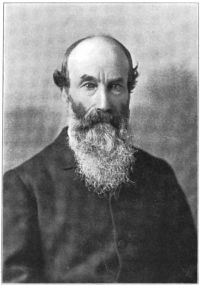
Nathaniel John Winch,  On the Geology of Northumberland and Durham (1817)

“ Basalt occurs in the mining field either between the regular sills, when it is considered as one of them, or, as it should seem, in overlying positions. The great whin sill in the lead mine sections does not consist of the whin of the colliery sinkers, but is really a basalt, coarse-grained in texture, and composed of white felspar and black hornblende, the latter mineral predominating, and giving to the rock a dark greenish grey colour. ”
Source: Wikisource

Get perspective with Kwize: daily news enlightened by great literature