Augite

Definition and stakes

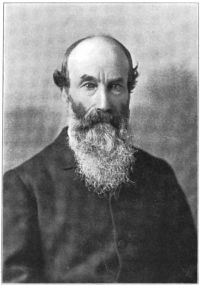
Portrait of John Ball John Ball,  The geography and geology of south-eastern Egypt (1912)

“ Microscopic examination shows it to be essentially a granulitic mixture of augite and plagioclase with a considerable amount of magnetite, and a little hornblende. All the minerals are of remarkable freshness, in rounded grains about a tenth of a millimetre in diameter. The augite, which forms about half the rock, is of a very pale green colour, sometimes showing faint traces of pleochroism with the same pinkish tints as hypersthene, from which, however, it is easily distinguished by its high extinction angles. ”
Source: Gutenberg

Leonard James Spencer,  1911 Encyclopedia Britannica (1911)

“ Such crystals, of short prismatic habit and black in colour, are common as phenocrysts in many basalts, and are hence known as “basaltic augite”; when the containing rock weathers to a clayey material the augite is left as black isolated crystals, and such specimens, usually from Bohemia, are represented in all mineral collections. Though typical of basaltic rocks, augite is also an important constituent of many other kinds of igneous rocks, and a rock composed almost wholly of augite is known as augitite. ”
Source: Wikisource

Portrait of John Ball John Ball,  The geography and geology of south-eastern Egypt (1912)

“ Augite is somewhat less abundant than the hornblende, with which it is intergrown, in pale pinkish-brown crystals, slightly pleochroic, with very distinct vertical cleavage and irregular cracks. Twinning is not very frequent. The extinction angles are usually under 30°. A few crystals which show slightly stronger pleochroism (pinkish-brown to very pale green) than the ordinary augite, and straight extinction, are probably hypersthene. Olivine is present in about equal quantity with the augite, in large irregular grains, much cracked, but otherwise fairly fresh, polarising in brilliant colours ”
Source: Gutenberg

Get perspective with Kwize: daily news enlightened by great literature