Greenstone

Definition and stakes

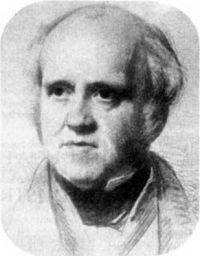
Portrait of Philip Parker King Philip Parker King,  Narrative of a Survey of the Intertropical and Western Coasts of Australia…

“ The term Greenstone also is of very loose application, and includes rocks that exhibit a wide range of characters; the predominant colour being some shade of green, the structure more or less crystalline, and the chief ingredients supposed to be hornblende and felspar, but the components, if they could be accurately determined, probably more numerous and varied, than systematic lists imply. ”
Source: Gutenberg

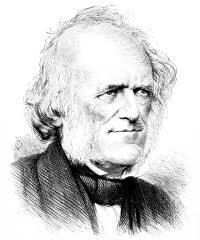
John MacCulloch,  On the Geology of various parts of Scotland (1814)

“ If in these cases we apply the name of any of their species in place of a generic term, we render our description of individuals unintelligible, and often contradictory and absurd. Thus the name basalt has been given to greenstone, as well as to many other modifications of trap, to which no name has, or perhaps ever can be applied. But the chief confusion has resulted from the application of the term greenstone, as a generic term for these rocks. In this way we have had greenstones of all colours, from red to white, and in which neither hornblende nor felspar were to be distinguished. ”
Source: Wikisource

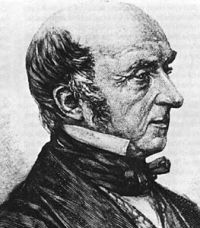
Portrait of Arthur Aikin Arthur Aikin,  Transactions of the Geological Society (1811)

“ Secondly, the beds of limestone and sandstone, which a hundred yards south of the Steeraway are found with an elevation of about 24° and resting immediately on a soft and sandy slate clay, are in the Steeraway itself tilted up at an angle of 40°, with a great mass of greenstone interposed between them and the slate clay. Is it not therefore probable that the greenstone has occupied the situation which it now holds, posteriorly to the formation of the stratified rocks between which it is at present found, and that to this intrusion is owing the high elevation of the limestone? ”
Source: Wikisource

Get perspective with Kwize: daily news enlightened by great literature