Summary

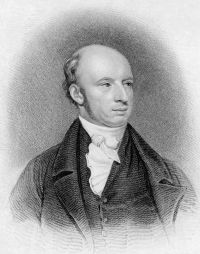
Portrait of Arthur Aikin Arthur Aikin On a Bed of Trap in Birch-hill Colliery (1816)

On my arrival I found that the lower part of the works (in which the bed of trap is situated) was not as yet sufficiently freed from water to admit of actual inspection; but being furnished with a plan of the colliery and with registers of the strata pierced through in sinking the three deepest pits, having also an opportunity of questioning several intelligent miners who had themselves worked in the colliery, and of examining many tons of trap rock and of the adjacent beds which had been brought to the surface, I think that there will be found no material error in the following statement.
Source: Wikisource

Portrait of Arthur Aikin Arthur Aikin On a Bed of Trap in Birch-hill Colliery (1816)

None of the beds are known to vary materially in thickness except the trap. The thickness of this latter in the Engine pit and in the Bye pit amounts to 24 feet, but in the pit B it is diminished to 12 feet, and in the pit D which is sunk down to the third coal the trap is wholly wanting. The miners themselves conclude from these facts, and apparently with reason, that the bed of trap is merely a great wedge from the green-rock fault which has intruded itself between the proper coal strata, but is by no means co-extensive with them.
Source: Wikisource

Portrait of Arthur Aikin Arthur Aikin On a Bed of Trap in Birch-hill Colliery (1816)

The indurated sandstone is of a yellowish grey colour, dense, compact and ponderous; it consists essentially of fine grains of quartzy sand and silvery mica, and contains very slender imperfect veins of calcareous spar, and small irregular granular concretions of ferriferous carbonate of lime: these concretions decompose by exposure to the air, and give the external surface of the stone a brownish yellow ochry tinge.
Source: Wikisource

Get perspective with Kwize: daily news enlightened by great literature