Joseph Beete Jukes

Joseph Beete Jukes

Summary

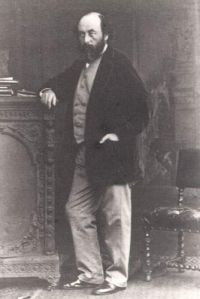
Portrait of Joseph Beete Jukes Joseph Beete Jukes The South Staffordshire Coalfield… (1859)

I have no doubt of the process of accumulation being a very slow and gradual one, for I have long been accustomed to look upon the time required for the formation of any wide spread bed of stratified rock whatever, even a single foot in thickness, as one to be measured only by the lapse of scores of years, perhaps by that of centuries. Each bed of coal is certainly made up of thin laminæ, which are obviously laminæ of deposition, every tenth or every hundredth of an inch requiring a distinct period for its production, as in the case of all other laminated rocks.
Source: Wikisource

Portrait of Joseph Beete Jukes Joseph Beete Jukes The South Staffordshire Coalfield… (1859)

There is, perhaps, at first a little difficulty in understanding this local accumulation of sand over a comparatively small area, surrounded by so much almost unmixed coal, even on the supposition of their both being drifted into the place we now find them, and deposited under some considerable depth of water, but in this case it is nothing more than the local occurrence of a cake of sandstone among wide spread beds of clay, or other material, a case which we know frequently occurs in nature.
Source: Wikisource

Portrait of Joseph Beete Jukes Joseph Beete Jukes The South Staffordshire Coalfield… (1859)

The second opinion, and perhaps the most generally entertained now, is, that the plants entering into the composition of the coal were not drifted, but grew and perished on the very spot we now find them forming coal, just as our own peat bogs at the present day would form coal if buried for a vast series of years under a great accumulation of earthy matters.
Source: Wikisource

Get perspective with Kwize: daily news enlightened by great literature