Summary

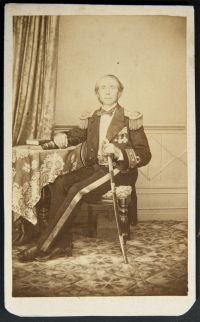
Portrait of Thomas Abel Brimage Spratt Thomas Abel Brimage Spratt Quarterly Journal of the Geological Society of London (1877)

After ascending for half an hour the western ridge bounding the Kosloo valley, where a mass of limestone decidedly overlies the coal-bearing deposits, we reached and followed the backbone of a ridge nearly 2000 feet above the sea, where the shales and schists composing it appeared to be but little inclined from the horizontal position, but whether conformable or not with the former or latter could not be determined
Source: Wikisource

Portrait of Thomas Abel Brimage Spratt Thomas Abel Brimage Spratt Quarterly Journal of the Geological Society of London (1877)

Having completed arrangements for the immediate shipment of about 100 tons of the screened coal, so as to fairly test its steam-generating properties on my return voyage to Constantinople, I landed with Mr. Barkley and proceeded up the valley with him to examine some of the mines or seams that were being worked by him; for, as the seams were seen cropping out on the sides of the valley between the associated shales and schists, they were worked by simple horizontal drifts or slightly inclined tunnellings into the hill, as far as the seams were thus traceable.
Source: Wikisource

Portrait of Thomas Abel Brimage Spratt Thomas Abel Brimage Spratt Quarterly Journal of the Geological Society of London (1877)

The coal in this valley is similar to that in the Zungledek. One seam exists at two miles from the sea, which is 12 feet thick and of good quality. The coal at Uzulmas is nine miles from the coast.
Feeling it necessary, or rather desirable, to see something of the coal-bearing deposits in the neighbourhood, I started on the morning of March 30th with Mr. Barkley to ride across the intervening district between Kosloo and Erekli, where I ordered my ship to meet me, the distance being nearly thirty miles.
Source: Wikisource

Get perspective with Kwize: daily news enlightened by great literature