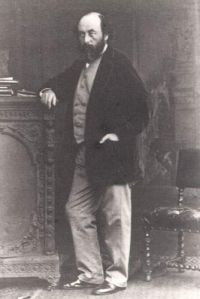
Joseph Beete Jukes

Joseph Beete Jukes

Summary

Portrait of Joseph Beete Jukes Joseph Beete Jukes The South Staffordshire Coalfield… (1859)

There is, in fact, perhaps scarcely any situation more suggestive of feelings of awe, than a side of work in the "thick seam," when a large fall of coal is brought down from the dusky heights of that lofty chamber; the thunder of the falling masses which seem to shake the solid earth and fill the air with a thick cloud of dust, contrasting fearfully with the dead silence which ensues, and which the hardy colliers scarce break by a whisper, whilst in suspense they listen for the slightest crack which might portend a farther fall.
Source: Wikisource

Portrait of Joseph Beete Jukes Joseph Beete Jukes The South Staffordshire Coalfield… (1859)

I believe, even practically unacquainted with the subject, will rise from the perusal of those statements without feeling that in the waste of a treasure of unique richness, and in the abandonment of an energetic and honest class of workmen to the dangers resulting from the absence of mental training, we have hitherto deserved as a nation but little credit for the stewardship of some of our finest coal-fields.
Source: Wikisource

Portrait of Joseph Beete Jukes Joseph Beete Jukes The South Staffordshire Coalfield… (1859)

But the driving of the stalls themselves is a work involving no little waste of coal and insecurity to the colliers; the mass of coal of eight yards wide having to be undercut, or holed about a couple of yards in, a large amount of coal is cut up into slack by the "pike," or collier's pick, and the men are exposed to continual risk from falls of coal. As the various portions of the seam are successively "cut" at the side of the stall, and brought down, the colliers have to mount on heaps of slack or light wooden stages, and are necessarily exposed to still greater danger.
Source: Wikisource

Get perspective with Kwize: daily news enlightened by great literature