Tun

Definition and stakes

Frederic Henry Balfour,  Leaves from my Chinese Scrapbook (1887)

“ Stories of this kind, be they strictly true in every particular or not, are constantly told about the Prince of Tun, and we may see in him a member of the Imperial family who, without any political position to compare with that of his more illustrious brothers, has achieved an amount of popularity amongst the common people that cannot be without its value to the reigning dynasty. ”
Source: Wikisource

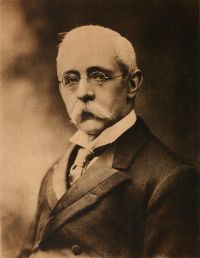
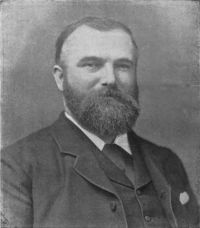
Portrait of Alexander MacBain Alexander MacBain,  An Etymological Dictionary of the Gaelic Language (1911)

“ Lat. tinguo, tingo, wet, Eng. tinge, tincture; O. H. G. duncôn, dip, ger. tunken, dip, steep.
tunna, a tun, ton, Ir., E. Ir. tunna; Ag. S. tunne, M. Eng. tonne, Norse tunna, Ger. tonne; all from Lat. tunna, a cask. Stokes (Bez.Beit.18) , suggests borrowing from the Norse; Kluge regards the words as of Celtic origin. On this see †tonn.
tunnachadh, beating, dashing; see tuimhseadh.
”
Source: Wikisource

Sylvanus Griswold Morley,  An Introduction to the Study of the Maya Hieroglyphs… (1915)

“ An examination of figure 60 shows that the glyphs which we have identified as the signs for the higher periods (A2, A3, A4, and A5,) contain one element common to all—the sign for the cycle, or period of 144,000 days. Indeed, A5 is composed of this sign alone with its usual coefficient of 9. Moreover, the next glyphs (A6, A7, A8, and A9 [27] ) are the signs for the katun, tun, uinal, and kin, respectively, and, together with A5, form a regular descending series of 5 terms, all of which are of known value. ”
Source: Wikisource

Get perspective with Kwize: daily news enlightened by great literature