Summary

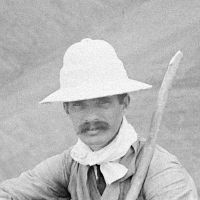
Portrait of John Smith Flett John Smith Flett 1911 Encyclopædia Britannica, Volume 6… (1911)

Natural clays, even when most pure, show a considerable range of composition, and hence cannot be regarded as consisting of a single mineral; clay is a rock, and has that variability which characterizes all rocks. Of the essential properties of clay some are merely physical, and depend on the minute size of the particles. If any rock be taken (even a piece of pure quartz) and crushed to a very fine powder, it will show some of the peculiarities of clays
Source: Wikisource

Portrait of John Smith Flett John Smith Flett 1911 Encyclopædia Britannica, Volume 6… (1911)

Lumps of manganese oxide, with a black, shining outer surface, are also characteristic of this deposit, and frequently encrust pieces of pumice or animal remains. The only fossils of the clay are radiolaria, sharks’ teeth and the ear-bones of whales, precisely those parts of the skeleton of marine creatures which are hardest and can longest survive exposure to sea-water. Their comparative abundance shows how slowly the clay gathers.
Source: Wikisource

Portrait of John Smith Flett John Smith Flett 1911 Encyclopædia Britannica, Volume 6… (1911)

Boulder-clay is a coarse unstratified deposit of fine clay, with more or less sand, and boulders of various sizes, the latter usually marked with glacial striations.
Some clay rocks which have been laid down by water are very uniform through their whole thickness, and are called mud-stones. Others split readily into fine leaflets or laminae parallel to their bedding, and this structure is accentuated by the presence of films of other materials, such as sand or vegetable debris. Laminated clays of this sort are generally known as shales
Source: Wikisource

Get perspective with Kwize: daily news enlightened by great literature