Olivine

Definition and stakes

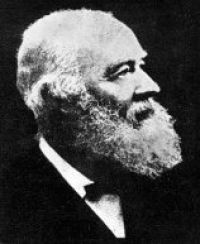
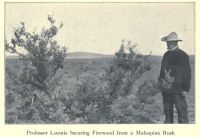
Portrait of Frederic Brewster Loomis Frederic Brewster Loomis,  Field Book of Common Rocks and Minerals

“ Olivine rarely occurs in crystals, but when it does they belong to the orthorhombic system. The dark-green grains or masses are recognized by the color, considerable hardness and indistinct cleavage. Serpentine may have a similar color, but its hardness is only 4. In hydrochloric acid olivine decomposes to a gelatinous mass.
Olivine is typically one of the constituents of the dark lavas, like basalt, gabbro, or peridotite. It is also a common mineral in meteorites. Olivine, in the presence of water, alters to other minerals, especially serpentine, with great facility.
”
Source: Gutenberg

Portrait of John Smith Flett John Smith Flett,  1911 Encyclopædia Britannica (1911)

“ Many examples of this type are known in different parts of the world, usually as local facies of other kinds of peridotite. In olivine-basalts of Tertiary age in the Rhine district small nodules of green olivine occur frequently. They are of rounded shapes and may be a foot in diameter. The structure is granular and in addition to olivine they may contain chromite, spinel and magnetite, enstatite and chrome-diopside. ”
Source: Wikisource

Portrait of John Ball John Ball,  The geography and geology of south-eastern Egypt (1912)

“ The olivine is in large rounded grains, nearly colourless where unaltered, showing the usual irregular cracks; some of the grains are altered to yellowish-green serpentine, with separation of granules of iron oxide.
Fig. 32.—Olivine-gabbro, Gebel Atut [10,365] , × 17. o, olivine; a, augite; h, hornblende; f, felspar (labradorite) .
[302] Of the fine-grained olivine-gabbros, one of the principal types is the rock of Gebel Atut and Madaret Um Gamil [10,365] . It is a dark heavy rock, weathering into angular blocks with a thin rusty skin, of great hardness and ringing under the hammer.
”
Source: Gutenberg

Get perspective with Kwize: daily news enlightened by great literature