Summary

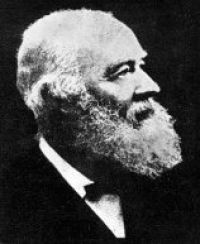
Portrait of John Ball John Ball The geography and geology of south-eastern Egypt (1912)

The numberless rugged ridges and peaks of the Gerf mass itself stretch for miles around, and out beyond, in every direction except to the east, one can see the more distant mountains. In the north, the most striking features are the distant spikes of Gebel Faraid, and still further off one may discern the blunter forms of Gebels Abu Gurdi, Hamata, and Abu Hamamid, 180 kilometres away. To the east is the coast-plain, with the granite peaks of Gebel Hamra Dom breaking the monotony.
Source: Gutenberg

Portrait of John Ball John Ball The geography and geology of south-eastern Egypt (1912)

As Elba is approached, many beautiful flowering plants not found further north are met with, while in the clefts of the slopes of Elba itself is a far richer vegetation than occurs wild in any other part of Egypt. I found the approach to Elba was stopped for baggage camels some four kilometres from the summit owing to the closeness of the trees, and the ascent on foot up the clefts of the mountain-face for the remainder of the way was more like going through an English wood than up a desert mountain.
Source: Gutenberg

Portrait of John Ball John Ball The geography and geology of south-eastern Egypt (1912)

Before descending from the mountain, I went along the ridge south-east and north-west of the highest point to get plane-table stations; in either direction progress along the top is extremely difficult. To the north-west it appeared as though the way would be easier by keeping on the east side of the ridge, but in reality this was not so, as the slope was so steep and smooth that some stretches could only be got over by wriggling along with as much as possible of one’s body in contact with the rock.
Source: Gutenberg

Get perspective with Kwize: daily news enlightened by great literature