Summary

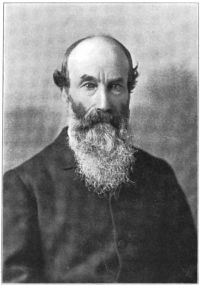
Portrait of Thomas George Bonney Thomas George Bonney Quarterly Journal of the Geological Society of London (1877)

The so-called granite vein is a grey bed of a highly altered rock: a crystalline granular compound of quartz, felspar, and a little mica or hornblende. At the base it is most difficult to distinguish from vein granite. Still, after several very long and careful examinations of this part of the coast, I am quite convinced that it is merely a case of extreme alteration, and that there is no granite here. Below this is another intruded mass of gabbro, terminating in a broad broken tongue, the root of which rests upon a prominence of serpentine.
Source: Wikisource

Portrait of Thomas George Bonney Thomas George Bonney Quarterly Journal of the Geological Society of London (1877)

The celebrated Mullion Cove is the end of a valley which very nearly defines the northern limit of this mass of serpentine; it is, however, cut everywhere through the hornblende schist. The actual junction is masked by debris; so this also is inconclusive.
The serpentine at the northern end varies: most of it is dark dull green to black; but in one place it assumes a redder tint. A common variety has a dark, almost black, matrix, full of small scales of glittering mineral, similar to, but darker than, those at Pradanack (no. 8) . A fine sea-cave here well repays a visit.
Source: Wikisource

Portrait of Thomas George Bonney Thomas George Bonney Quarterly Journal of the Geological Society of London (1877)

Here a lofty cliff of serpentine is shattered by veins of gabbro, one of which, about ten feet thick, forms a sort of terrace, some height above the shore, which can be reached with a little difficulty; the gabbro is extremely coarse, the diallage crystals being often two or three inches long; and some of the largest occur in a vein only a few inches thick. Just on the left there appears to be a small fault in the serpentine; on the right is a large included mass of schist forming a headland, down to which descends a dyke of dark compact trap about a foot wide.
Source: Wikisource

Get perspective with Kwize: daily news enlightened by great literature