Summary

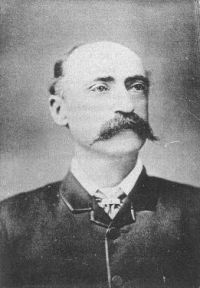
Portrait of Ernest Giles Ernest Giles Australia Twice Traversed

The view from its summit was limited. To the west the hills of this chain still run on; to the east I could see Mount Ferdinand. The valley in which the camp and water was situate lay in all its loveliness at our feet, and the little natural trough in its centre, now reduced in size by distance, looked like a silver thread, or, indeed, it appeared more as though Titania, the Queen of the Fairies, had for a moment laid her magic silver wand upon the grass, and was reposing in the sunlight among the herbage and the flowers.
Source: Gutenberg

Portrait of Ernest Giles Ernest Giles Australia Twice Traversed

Their greatest enemy—besides the wild black man and the dingo—is the large eagle-hawk, which, though flying at an enormous height, is always on the watch; but it is only when the wallaby lets itself out, on to the stony open, that the enemy can swoop down upon it. The eagle trusses it with his talons, smashes its head with its beak to quiet it, and, finally, if a female, flies away with the victim to its nest for food for its young, or if a male bird, to some lonely rock or secluded tarn, to gorge its fill alone.
Source: Gutenberg

Portrait of Ernest Giles Ernest Giles Australia Twice Traversed

What a strange maze of imagination the mind can wander in when recalling the names of those separated features, the only ones at present known to supply water in this latitude—that is to say, the Murchison River, and this new-found Rawlinson Range, named after two Presidents of the Royal Geographical Society of London. The late and the present, the living and the dead, physically and metaphysically also, are not these features, as the men, separated alike by the great gulf of the unknown, by a vast stretch of that undiscovered country from whose bourne no traveller returns?
Source: Gutenberg

Get perspective with Kwize: daily news enlightened by great literature