Chlorite

Definition and stakes

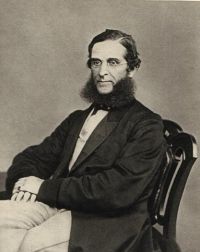
Leonard James Spencer,  1911 Encyclopædia Britannica, Volume 6… (1911)

“ The chlorites usually occur as alteration products of other minerals, such as pyroxene, amphibole, biotite, garnet, &c., often occurring as pseudomorphs after these, or as earthy material filling cavities in igneous rocks composed of these minerals. Many altered igneous rocks owe their green colour to the presence of secondary chlorite. Chlorite is also an important constituent of many schistose rocks and phyllites, and of chlorite-schist it is the only essential constituent. ”
Source: Wikisource

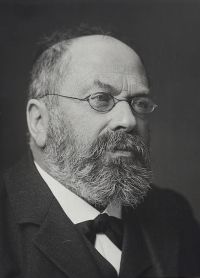
Portrait of Andrew Ure Andrew Ure,  A Dictionary of Arts, Manufactures and Mines

“ Instead of 1 atom chlorite of lime, and 3 atoms chloride of calcium, we shall have 4 atoms chloride of lime, 6 atoms water, and 2·25 of impurity as before.” In such ambiguity does this able chemist place this interesting compound, for theoretical reasons, of which I cannot see the value. Surely there is no difficulty in conceiving chlorine to exercise a direct attractive force towards the hydrate of lime, as it is known to do towards each of its elementary constituents, the oxygen and the calcium. Such refinements as the preceding tend merely to mystify a plain matter. ”
Source: Gutenberg

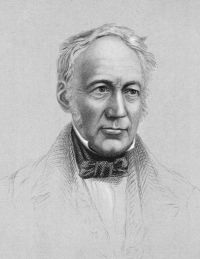
Portrait of John Evans John Evans,  The Ancient Stone Implements, Weapons… (1897)

“ An oblong piece of chlorite slate, 53/8 inches long. 13/4 inches broad, and 1 inch thick, rounded on one face and hollowed on the other, was found in a gravel-pit at Aldington, Worcestershire. [7] It has four holes through it, one at each corner, just large enough on the rounded face to allow a fine ligament to pass through, and countersunk on the other face. The plate of chlorite slate shown in Fig. 355 is flat, instead of hollowed, and the holes at the corners are countersunk on both faces. ”
Source: Wikisource

Get perspective with Kwize: daily news enlightened by great literature