Palladium

Definition and stakes

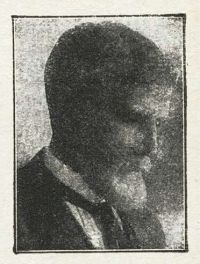
Dmitry Ivanovich Mendeleyev,  The Principles of Chemistry, Volume II

“ Metallic palladium is obtained by igniting the ammonio-compound or the cyanide, PdC2N2. It occurs native, although rarely, and is a metal of a whiter colour than platinum, sp. gr. 11·4, melts at about 1,500°; it is much more volatile than platinum, partially oxidises on the surface when heated (Wilm obtained spongy palladium by igniting PdCl2,2NH3, and observed that it gives PdO when ignited in oxygen, and that on further ignition this oxide forms a mixture of Pd2O and Pd) , and loses its absorbed oxygen on a further rise of temperature. ”
Source: Gutenberg

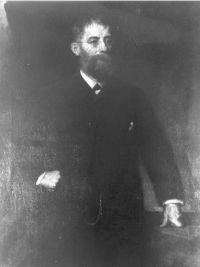
Portrait of John Call Dalton John Call Dalton,  A new system of chemical philosophy…

“ This conclusion was corroborated by the circumstance that 100 palladium were found to take 28 of sulphur, or double the quantity of oxygen, which frequently happens with the metals. [Pg 25]
Vauquelin precipitates the oxide of palladium from the muriate by potash; it appears of a red brown colour, and is probably a hydrate; when washed and dried in a moderate heat, it becomes black, it loses 20 per cent. by a red heat and becomes metallic.
”
Source: Gutenberg

Edwin E. Slosson,  Creative Chemistry: Descriptive of Recent Achievements in the Chemical Industries

“ All the members [Pg 285] of the platinum family, formerly ignored, were pressed into service, palladium, rhodium, osmium, iridium, and these, alloyed with gold or silver, were employed more or less satisfactorily by the dentist, chemist and electrician as substitutes for the platinum of which they had been deprived. One of these alloys, composed of 20 per cent. palladium and 80 per cent. gold, and bearing the telescoped name of "palau" (palladium au-rum) makes very acceptable crucibles for the laboratory and only costs half as much as platinum. ”
Source: Gutenberg

Get perspective with Kwize: daily news enlightened by great literature