“ Miss Graham was a devout Congregationalist, and hushed the others into gravity when their eyes began to dance dangerously.However, as Mr. Pill warmed to his work, the girls grew sober enough. He awed them, and frightened them with the savagery of his voice and manner. His small gray eyes were like daggers unsheathed, and his small, round head took on a cat-like ferocity, as he strode to and fro, hurling out his warnings and commands in a hoarse howl that terrified the sinner, and drew 'amens' of admiration from the saints. ”
Graham
Definition and stakes
The literary concept of "Graham" encompasses a multifaceted name and character, recurring across 19th- and early 20th-century fiction to embody diverse human experiences. From Hamlin Garland’s pious and austere Miss Graham to H.G. Wells’ protagonist swayed by social charm, the name navigates themes of morality, identity, and change. E.
Frances Poynter depicts Graham as a figure confronting mortality, while Ian Maclaren presents him as a historical figure torn between duty and destiny. These varied portrayals, spanning authors like Jack London and Charlotte Brontë, reveal "Graham" as a versatile symbol for exploring emotional and societal intricacies, reflecting the era’s literary concerns with individualism and human endurance.
Quotes about “Graham”
Baron Edward Bulwer Lytton Lytton, The Parisians — Volume 03
“ On first entering the gardens, Graham's eye was attracted and dazzled by a brilliant form. It was standing under a festoon of flowers extended from tree to tree, and a gas jet opposite shone full upon the face,—the face of a girl in all the freshness of youth. If the freshness owed anything to art, the art was so well disguised that it seemed nature. The beauty of the countenance was Hebe-like, joyous, and radiant; and yet one could not look at the girl without a sentiment of deep mournfulness. She was surrounded by a group of young men, and the ring of her laugh jarred upon Graham's ear. ”
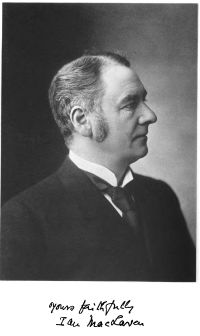 Ian Maclaren,
Graham of Claverhouse
Ian Maclaren,
Graham of Claverhouse
“ Graham, I know what you think of me as clearly as if you had spoken. Let me say what I think of you. You are a gallant gentleman, full of the ideas of the past, and incapable of changing; you will be a loyal servant to your own cause, and it will be beaten. To you I owe my life. Possibly it might have been better for you to have let me fall by the sword of one of Condé’s dragoons, but we are all in the hands of the Eternal, Who doeth what He wills with each man. ”