
“ I come when I please and where I please, and you know it, Young Gallup! And if you think you are the man to throw me out, hop to it and don't let a little hundred dollars hold you back! Better than that; if you'll tie into me right now and chuck me out of doors, getting all your hangdogs that will take a chance with you to help you, you've got my word that I'll add a second hundred as your bonus! Or a thousand, by heaven! And right now you'll toe the scratch or back down and shut your mouth. ”
Gallup
Definition and stakes
Gallup, an American analytics and advisory company established in 1935 by George Gallup, is well known for its public opinion polling and management consulting. Although its real-world impact extends to global surveys and employee engagement tools, literary mentions of "Gallup" emerge in a range of contexts. Authors such as Jackson Gregory and L.
Allen Harker portray characters named Gallup as determined individuals dealing with conflicts over wealth and political beliefs, while Elizabeth Wells Gallup's academic research delves into hidden codes in literature. These differing depictions highlight the name's complex significance, connecting empirical analysis with narrative creativity.
Quotes about “Gallup”
L. Allen Harker, The Ffolliots of Redmarley
“ Eloquent Gallup shall be a politician. Some day he'll stand for parlyment, and he'll get in, and when he's there he'll speak up and he'll speak out for the rights of his fellow men, and he'll proclaim their wrongs. ”
“ Maybe better I die and fool you!""Listen, Joe." Gallup speaking—Gallup, who feared that Joe might be fool enough to die with locked lips rather than be robbed of his new fortune; Gallup, a man who could understand another man doing anything, standing any torture, rather than lose the one golden thing in life. "We'll make you a fair proposition, us three men. You found the gold; all right, you got a right to a share. You can't hog it anyhow; other men will come rushing in as soon as you drop a pick in it; they'll stake claims all around you ”
L. Allen Harker, The Ffolliots of Redmarley
“ Abel Gallup was never tired of impressing upon Eloquent that "the people had the power, and the people had the votes to send you to parlyment or keep you out. Don't you be misled, my boy, by them as would wish you to try to please the gentry by and bye. The gentry's few and the people's many. ”
“ Gallup has doubled his prices and is likely to double them again.""He's that sort," conceded Deveril. "He plays a big game and all the time has a shrewd eye for the little bets. By the way, do you feel entirely comfortable there?" ”
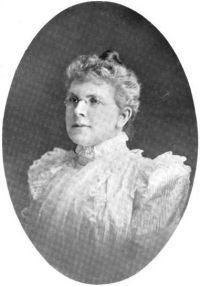 Elizabeth Wells Gallup,
Concerning the bi-literal cypher of Francis Bacon discovered in his works
(1899)
Elizabeth Wells Gallup,
Concerning the bi-literal cypher of Francis Bacon discovered in his works
(1899)
“ Marston has detected in the Iliad translation, we can afford to wait for Mrs. Gallup’s explanation. If the whole problem rested on Mrs. Gallup’s good faith, the flaw might seem supicious, but it rests on the shape of letters in books at the British Museum. In itself it is the biggest literary problem ever set before the world; the prima facie case is overwhelming, as every one who has studied the question knows full well. How is it possible that a dreary, senseless old prejudice should be allowed to stand in the way of the truth? ”
L. Allen Harker, The Ffolliots of Redmarley
“ He's only got moderate ability and an uncommonly pretty seat on a horse. He'll get Field all right. But why are you so sure, my dear, that he'll be your fate? Why not Gallup here? and you could try and convert him to your views on the Suffrage question? He'd be some use, you know. He has a vote."Again Eloquent blessed the darkness as he coloured hotly and brought his mind back to the present with a violent wrench. ”
Elizabeth Wells Gallup,
Concerning the bi-literal cypher of Francis Bacon discovered in his works
(1899)
“ Gallup herself, tells how she came to discover the existence of the cipher in certain books, and gives a brief account of her work, a work, to quote her own words, “arduous, exhausting and prolonged”; and shows how, though her discovery “may change the names of some of our idols,” we are gainers, not losers, by the change. ”
Elizabeth Wells Gallup,
Concerning the bi-literal cypher of Francis Bacon discovered in his works
(1899)
“ If a careless reading, it discredits his criticism; if a wilful perversion, it is unworthy and without justification.This is much like his remarkable statement in Longman’s Magazine regarding the Argument of the Iliad: “The right course with Mrs. Gallup is to ask her to explain why or how Bacon stole from Pope’s Homer ... and how he could be (as he certainly was) ignorant of facts of his own time.... These circumstances make it certain that, though the cipher may be a very nice cipher, Mrs. Gallup must have interpreted it all wrong. ”
Elizabeth Wells Gallup,
Concerning the bi-literal cypher of Francis Bacon discovered in his works
(1899)
“ Gallup’s claim can be a “bogus” one, and proved them false. Thus we are driven by the inexorable force of logic to the only [Pg 92] remaining conclusion: That Francis Bacon did put a cipher into his printed works; that Mrs. Gallup has discovered it and has translated it. ”
Elizabeth Wells Gallup,
Concerning the bi-literal cypher of Francis Bacon discovered in his works
(1899)
“ REPLIES TO CRITICISMS. Elizabeth Wells Gallup.In presenting the results of my work in deciphering the bi-literal cypher, I expected criticism, but it has taken on some features that have been quite surprising to me.To answer fittingly all the questions raised would be to write a book. Some are relevant, many not; some are prompted by desire for knowledge, others by a desire to check what they regard as a heresy; most show unfamiliarity with the subject, and not a few are mistaken in their statements of facts. ”
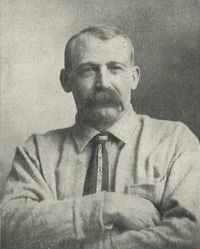 Andy Adams,
A Texas Matchmaker
Andy Adams,
A Texas Matchmaker
“ The very idea of Gallup and the profligate Scales riding to hounds and basking in the society of charming girls nettled me. The remainder of the ranch outfit was under Deweese, building the new corrals, so that I never heard my own tongue spoken except at meals and about the house. My orders included the cutting of a few hundred rock extra above the needs of the chapel, and when this got noised among the help, I had to explain that there was some talk of building a stone cottage, and intimated that it was for Juana and Fidel. ”
Amy Bell Marlowe, Frances of the Ranges; Or, The Old Ranchman's Treasure
“ Tom Gallup was yelling like a wild boy on the fence. Sue could scarcely catch her breath for fear. She would not have admitted it for the world; but the courage of the range girl amazed her. Her own rescue from the charge of the little black bullock by Frances had not impressed Sue Latrop as did this battle with the pony in the arena of the horse corral.Fred Purchase ran with another lariat. Frances 260 seized it, flung the noose over the upraised head of the pony, took a swift turn around a shed post, and brought the “bad actor” up short. ”
Anonymous, Mesa Verde [Colorado] National Park
“ The round trip fare per person (360 miles) is $25. A minimum of two passengers is required. Fare for children, five and under twelve, is $12.50. Meals and hotel accommodations en route or at the park are not included. El Navajo Hotel, operated by Fred Harvey, offers excellent overnight accommodations at Gallup.The Cannon Ball Stage operates bus service from Gallup, via Shiprock and Farmington, to Durango, where connection may be made with the motor bus of the Rio Grande Motor Way, Inc., for the trip from Durango to the park. The Cannon Ball Stage bus leaves Gallup each day at 11:30 a. ”
Andy Adams,
A Texas Matchmaker
“ The cattle were intentionally bedded loose; but even in the starlight and waning moon, every man easily spotted the ladino beef, uneasily stalking back and forth like a caged tiger across the bed ground. A half hour before dawn, he made a final effort to escape, charging out between Gallup and the vaquero following up on the same side. From the other side of the bed ground, I heard the commotion, but dare not leave the herd to assist. There was a mile of open country surrounding our camp, and if two men could not turn the beef on that space, it was useless for others to offer assistance. ”
Joan Clark, Penny Nichols Finds a Clue
“ When she left the house a half hour later the girl was still excited and overwrought. Not until Penny was nearly home did it occur to her that she had forgotten to look at the photograph of Jimmie Davis. "Oh, well, it doesn't matter," she thought. As she drove the roadster into the garage, Mrs. Gallup came down the path to meet her. "I'm sorry to be so late," Penny said quickly before the housekeeper could take her to task. "A million and one things detained me. Dad's home, I suppose?" "No, he isn't. But someone has been trying to get you on the telephone for the past hour." ”
Elizabeth Wells Gallup,
Concerning the bi-literal cypher of Francis Bacon discovered in his works
(1899)
“ We have now established, as we think, beyond contradiction, the fact that so far from being incredulous as to the existence of the biliteral cipher in Bacon’s works, we ought to expect it. How is it, then, the reader will say, that it has remained undiscovered for so long? It is the old story once more of Columbus and the egg, or, as Mrs. Gallup aptly quotes from Bacon himself, “in which sort of things it is the manner of men, first to wonder that such a thing should be possible, and after it is found out, to wonder again how the world should miss it so long.” ”
Elizabeth Wells Gallup,
Concerning the bi-literal cypher of Francis Bacon discovered in his works
(1899)
“ Let Mrs. Gallup successfully meet Mr. Mallock’s challenge by taking, as he suggests, the epistle from Macbeth to Lady Macbeth (Macbeth, Act. I, Scene 5) , which is one of the passages in the first Folio printed in Italics, and indicating under each letter the font to which, according to her interpretation, it belongs. Then let Mr. Mallock have the passage photographically enlarged, so that the dullest eye can detect the smallest differences in the letters, and when the result is printed the public will have a fair chance to judge for itself. ”
Elizabeth Wells Gallup,
Concerning the bi-literal cypher of Francis Bacon discovered in his works
(1899)
“ But ridicule and invective are not argument, prejudice is not proof. “Some of our friends,” we used to be told in our childhood, “are for warning, others for example.” Taking those we have quoted for warning, let us give a fair and open-minded consideration to Mrs. Gallup’s claims.To do this it will be necessary to describe Bacon’s Biliteral Cipher. His own description of it may be seen in any edition of his De Augmentis. Its principle is extremely simple, being, in fact, that of the Morse Code at present used in telegraphy—namely, various combinations of two differences. ”
Joan Clark, Penny Nichols Finds a Clue
“ A taxi has already been sent for you. It should be there by this time." "I'll be waiting," Penny promised. She hung up the receiver and turned to the housekeeper who was hovering anxiously at her elbow. "Dad's been hurt," she said tersely to hide her emotion. "I don't know how badly for I couldn't learn the details. I must go to him at once." "Oh, you poor thing," Mrs. Gallup swept the trembling girl into her arms. They clung to one another for an instant, then Penny resolutely brushed away her tears. "It probably isn't as bad as we fear," she said hopefully. ”
 Albert Frederick Calvert,
Bacon and Shakespeare
Albert Frederick Calvert,
Bacon and Shakespeare
“ She is convinced of the soundness of her discoveries, and she forthwith leaps to the conclusion that “the proofs are overwhelming and irresistible, that Bacon was the author of the delightful lines attributed to Spenser—the fantastic conceits of Peele and Greene—the historical romances of Marlowe—the immortal plays and poems put forth in Shakespeare’s name—as well as the Anatomy of Melancholy of Burton.” Mrs. Gallup shows scant appreciation of the illimitable genius she claims for Bacon in this sentence. ”
Elizabeth Wells Gallup,
Concerning the bi-literal cypher of Francis Bacon discovered in his works
(1899)
“ On the other hand, the fact that the amateur finds himself, after weeks of study, still completely bewildered in his attempt to allocate the various letters to two different founts of type, in such a way as to elicit a sentence or even a word in groups of dots and dashes, according to the Baconian code, must not be taken too hastily as a proof that the alleged cypher is imaginary. Mrs. Gallup has done much, though not so much as she might have done, to enable her readers to settle this point for themselves. ”
Elizabeth Wells Gallup,
Concerning the bi-literal cypher of Francis Bacon discovered in his works
(1899)
“ For a considerable time an American student, Dr. Owen, had been working at the elucidation of another cypher altogether, also alleged to be Bacon’s, and to exist in the Shakespearian plays. This is the word-cypher. With its details we need not here concern ourselves. It is enough to say that an American lady, Mrs. Gallup, was his assistant. The above passage from Bacon arrested her attention, and she became convinced that the Bi-literal Cypher had been described by its inventor with special ulterior purpose and might possibly be found co-existing in Shakespearian plays with the others. ”
Albert Frederick Calvert,
Bacon and Shakespeare
“ Bacon, he contends, was not writing his plays for fame, but for the money it brought him. Mr. Theobald contends that the plays could not have been written by Shakespeare because he was too busily employed in “carving his own fortune” ... “filling his pockets” ... “working for the present, not for the future,” to devote the necessary leisure to literary pursuits. Bacon himself, according to the bi-literal cipher discoveries of Mrs. Gallup, declares that so far from receiving remuneration for his plays, he paid “a sufficient reward in gold” to Shakespeare for the use of his name. ”
Elizabeth Wells Gallup,
Concerning the bi-literal cypher of Francis Bacon discovered in his works
(1899)
“ The form of many of the capitals also differs in the different copies.... Mr. Cuningham’s copy differs widely from the others.... Either each copy contains a different cipher story, which is absurd, or the decipherer happened by chance to light on the only correct copy, which is equally absurd.” Then Mr. Bompas proceeds to build an argument upon the fact that the copy of my MS., furnished to the Society, did not correspond with some copy of Henry VII. with which he compared it, concluding, therefore, that the cipher system must be a myth, and Mrs. Gallup a visionary or a fraud. ”
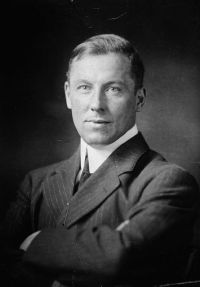 Robert W. Service,
The poisoned paradise: A romance of Monte Carlo
(1922)
Robert W. Service,
The poisoned paradise: A romance of Monte Carlo
(1922)
“ I know that table like a living thing, and yet I never saw it until to-day.”“I suppose,” said Hugh, “that you base your system on the law of average?”The professor laughed tolerantly. “No, I don’t. Law [225] of average,—that is child’s talk to me. Of course every table has its average, every wheel has its average, every croupier, you, I; every coup that is played, is an average with something that has gone before. Ah! these foolish system-players with their talk of average and probability and phenomenon. Why, every coup is a phenomenon as regards something that has gone before. ”
 John Clark Ridpath,
The Life and Work of James A. Garfield…
John Clark Ridpath,
The Life and Work of James A. Garfield…
“ The development of statistics is causing history to be rewritten. Till recently the historian studied nations in the aggregate, and gave us only the story of princes, dynasties, sieges, and battles. Of the people themselves—the great social body with life, growth, sources, elements, and laws of its own—he told us nothing. Now statistical inquiry leads him into the hovels, homes, workshops, mines, fields, prisons, hospitals, and all places where human nature displays its weakness and its strength. ”
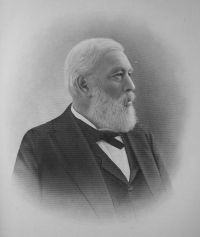 Orange Jacobs,
Memoirs of Orange Jacobs
Orange Jacobs,
Memoirs of Orange Jacobs
“ While the logic of such facts or figures may be very convincing, yet in the hands of most men their presentation is very uninteresting. Few men can present statistics in an interesting and captivating manner. Garfield must be considered as pre-eminent among that class of men. I have heard him make a speech of over an hour in length on financial questions in which he not only presented a formidable array of statistics, but held his auditors spell-bound to its conclusion. It may be said of the orators of the House that though they are great advocates, they are not constructive statesmen ”
Various, Popular Science Monthly (1900)
“ Thus, by taking a little trouble, the historian can apply one constant measure to his judgments of increase and decrease, as he reviews social changes. He must subdivide his community into enumeration units, and against each unit, at each convenient date, he must enter a record of his judgment that the trait, activity, interest, or relation under investigation can be predicated of a large or of only a small majority, of a large or of only a small minority, of the individuals composing the enumeration unit. ”
 Alfred Russel Wallace,
Island Life — Chapter IV.
(1895)
Alfred Russel Wallace,
Island Life — Chapter IV.
(1895)
“ If we formed our groups, not by equal numbers, but by equal amount of variation, we should probably find, in accordance with the law of averages, that the central group in which the mean characteristics prevailed was much more numerous than the extremes, perhaps twice, or even three times, as great as either of them, and forming such a series as the following—10 maximum, 30 mean, 10 minimum development. ”
 Voltaire,
Letters concerning the English Nation
(1733)
Voltaire,
Letters concerning the English Nation
(1733)
“ Instead therefore of following the Account which had been communicated to me, I contented myself with relating, That it was reported, some Hamburghers had given a Sum of Money secretly to Count Steinbok. This Report became universal, and was founded on Appearances. An Historian is allow'd to insert Reports, as well as Facts, and when he publishes a general Report, an Opinion, merely as an Opinion, and not as Truth, he is neither responsible for it, nor ought to be accus'd in any manner for so doing. ”
