Summary

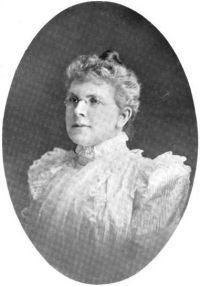
Portrait of Elizabeth Wells Gallup Elizabeth Wells Gallup Concerning the bi-literal cypher of Francis Bacon discovered in his works (1899)

I must have imagined the moanings of remorse over the tragedy of Essex; the discovery of the motherhood of Elizabeth; guessed at the broadened field of Bacon’s literary powers to take in all the works which are disclosed as coming from his hand; the directions for writing out the word-cipher; the argument of the Tragedy of Anne Boleyn; the epitome of the Iliad and of the Odyssey; the explanatory letters of Dr. Rawley and Ben Jonson that are found in the cipher; the flights of fancy which occasionally appear in the deciphered work, and all the rest.
Source: Gutenberg

Portrait of Elizabeth Wells Gallup Elizabeth Wells Gallup Concerning the bi-literal cypher of Francis Bacon discovered in his works (1899)

Fully conscious of the absolute veracity of the work I have done, and my responsibility in the expression, I know that the Bi-literal Cipher exists in the printing of Bacon’s works: I know that others can follow over the same course, if they have the aptitude and patience for it, and can reach no other correct results. To those who have availed themselves of the opportunity carefully to study and follow my work, no argument is needed to convince them of my assertion. Doubts and objections come from those who have not had that opportunity or have given the work but slight attention.
Source: Gutenberg

Portrait of Elizabeth Wells Gallup Elizabeth Wells Gallup Concerning the bi-literal cypher of Francis Bacon discovered in his works (1899)

As not every one can be a poet, an artist, an astronomer, or adept in other branches requiring special aptitude, so, and for the same reasons, not every one will be able to master the intricacies of the Cipher, for in many ways it is most intricate and puzzling,—not in the system itself, but in its use in the books. “It must not be made too plain lest it be discovered too quickly nor hid too deep, lest it never see the light of day,” is the substance of the inventor’s thought many times repeated in the work.
Source: Gutenberg

Get perspective with Kwize: daily news enlightened by great literature