Summary

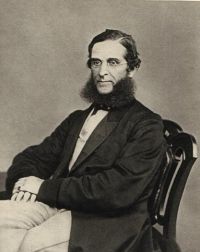
Portrait of John Evans John Evans The Ancient Stone Implements, Weapons… (1897)

Or again, taking our stand at Ealing, or Acton, or Highbury, and looking over a broad valley fully four miles in width, with the river flowing through it at a depth of 100 feet below its former bed, in which, beneath our feet, are relics of human art deposited at the same time as the gravels; which of us can picture to himself the lapse of time represented by the excavation of a valley on such a scale, by a river larger, it may be, in volume than the Thames, but still draining only the same tract of country?
Source: Wikisource

Portrait of John Evans John Evans The Ancient Stone Implements, Weapons… (1897)

We know not where or when the dawn of human civilization arose, but it was probably long before the date of our earliest River-Gravels and in some part of the world more favoured by climate than Britain. Why then should we speak of British implements as Eolithic? And how can we apply the term Mesolithic to a period intervening between the Palæolithic and Neolithic Ages, when we know neither when the one ended nor when the other began?
Source: Wikisource

Portrait of John Evans John Evans The Ancient Stone Implements, Weapons… (1897)

The investigators into the early history of mankind are like explorers in search of the source of one of those mighty rivers which traverse whole continents: we have departed from the homes of modern civilization in ascending the stream, and arrived at a spot where traces of human existence are but few, and animal life has assumed strange and unknown forms
Source: Wikisource

Get perspective with Kwize: daily news enlightened by great literature