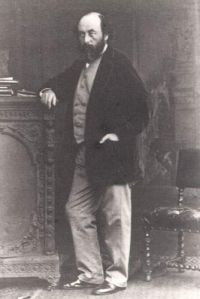
Joseph Beete Jukes

Joseph Beete Jukes

Summary

Portrait of Joseph Beete Jukes Joseph Beete Jukes The South Staffordshire Coalfield… (1859)

The sheets of greenstone that spread from below the Rowley Hills, through the centre of the district, up to Wednesfield and Bentley, always run pretty nearly in the same beds, at whatever depth those beds may be found, and however they may be broken by faults. This shows that the "green rock" is itself cut through by the faults and thrown up or down by them, as the case may be, exactly as the Coal-measures are affected by them.
Source: Wikisource

Portrait of Joseph Beete Jukes Joseph Beete Jukes The South Staffordshire Coalfield… (1859)

The deterioration of the Thick coal by the quantity of sandstone that seems to come into it as the hills are approached is one reason for its not having been followed as yet beneath them. The fear that the coal which may exist is partly destroyed by trap rock is probably another reason.
It may still happen that at some point round the Rowley Hills good unaltered coal may be found for some distance beneath the basalt, but at present all the known evidence is the other way.
Source: Wikisource

Get perspective with Kwize: daily news enlightened by great literature