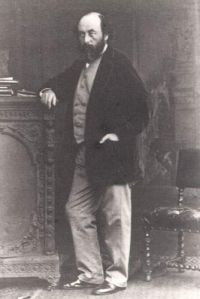
Joseph Beete Jukes

Joseph Beete Jukes

Summary

Portrait of Joseph Beete Jukes Joseph Beete Jukes The South Staffordshire Coalfield… (1859)

The South Staffordshire coal-field has been so thoroughly worked and explored, that a study of its faults and dislocations will add something of precision and completeness even to the knowledge of a professed geologist.
It is clear that a single fault, that is a fissure running along one straight or slightly curved line, can only produce a "throw" or dislocation of the beds along a part of its course.
Source: Wikisource

Portrait of Joseph Beete Jukes Joseph Beete Jukes The South Staffordshire Coalfield… (1859)

Again, the "rolls" or "swells" in the floor of the coal are called "faults." Mere partial and irregular thickenings or thinnings of a bed are spoken of as "faults." I have even heard the natural outcrop of a bed of coal at the surface, especially if it rose to the crop a little more suddenly than usual, spoken of as "the fault" by many old miners of the district.
One of the most eminent and long experienced coal and iron masters of South Staffordshire gave, as his definition of a fault, on a legal examination, "anything which interrupted and deteriorated the coal."
Source: Wikisource

Portrait of Joseph Beete Jukes Joseph Beete Jukes The South Staffordshire Coalfield… (1859)

We may, perhaps, here advantageously say a word or two as to the age of the principal faults and dislocations of the South Staffordshire district.
It is clear that, however the Silurian rocks may have been partially disturbed and denuded before the deposition of the Coal-measures, none of the prominent dislocations and disturbances which give the marked features to the structure of the district, took place till after the formation of the whole of the Coal-measure series. All the great faults, then, are of a later date than the deposition of the newest Coal-measures of the district.
Source: Wikisource

Get perspective with Kwize: daily news enlightened by great literature