Magma, in geology, refers to molten rock beneath the Earth’s crust, a fundamental agent in shaping igneous formations. Authors such as John Smith Flett explored its gas content, noting its subterranean origins, while Svante Arrhenius emphasized examining trapped gases to understand Earth’s primordial conditions. Roselle M.
Girard highlighted magma’s role in forming igneous rocks through solidification, and Harold L. Goodwin described its mysterious formation processes. These perspectives collectively underscore magma’s dual role as both a dynamic geological force and a key to unraveling Earth’s internal dynamics through its interactions with rock and gas.
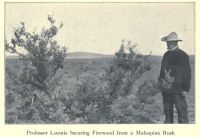 Frederic Brewster Loomis,
Field Book of Common Rocks and Minerals
Frederic Brewster Loomis,
Field Book of Common Rocks and Minerals