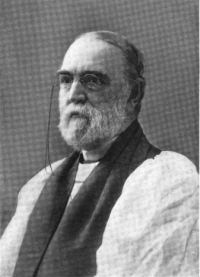
Thomas Augustus Jaggar

Thomas Augustus Jaggar

Summary

Portrait of Thomas Augustus Jaggar Thomas Augustus Jaggar My experiments with volcanoes (1956)

Superposed on all this is so-called physiography, the science of falling materials and water, the rotting of the lands, and the accumulation of debris. A net of rivers over ground and under ground is what stands out, and the living river pattern has changed incessantly through the ages. But through and over it is a moving process of the ages, kinetic, alive with glaciers, hot springs, underground heat or surface cold, soaking rains and rushing storms, earthquake and uplift, fault motions and sinkings.
Source: Gutenberg

Portrait of Thomas Augustus Jaggar Thomas Augustus Jaggar My experiments with volcanoes (1956)

While working from volcano observatories for the extension of geology in Alaska, Japan, Hawaii, Tonga, the Caribbean and Italy, and on the mainland of California, Central America, and New Zealand, I have found myself on the outskirts of vast oceans, engaged in a science almost as unsatisfactory as the textbook science of historical and continental geology. It is always a compromise, for we are up against a crying need for maps of the bedrock under the muds of the vast oceans. Volcanism cries out for a knowledge of the globe, and it is helped by such work as that of Gutenberg and Richter.
Source: Gutenberg

Portrait of Thomas Augustus Jaggar Thomas Augustus Jaggar My experiments with volcanoes (1956)

Everything is in motion to one who senses slow motion, occasionally breaking down resistance and charging ahead. And geology is a sense of slow motion and its jumps for 5 million years, with this human year, here and now, of great importance. Geology, like humanity, is not just history.
Under all are gas and heat; Saratoga Springs, Yellowstone, the Comstock Lode, and Mount Shasta. The series gets hotter from New York to California. And out at sea the refuse of the continent is dumping all day long. And science is anxiously waiting to learn how hot sea bottom is.
Source: Gutenberg

Get perspective with Kwize: daily news enlightened by great literature