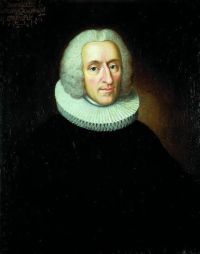
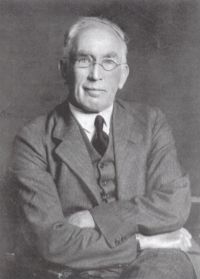
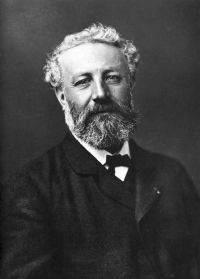
John Allen Howe and Fridtjof Wedel-Jarlsberg Nansen

Biographical details

John Allen Howe and Fridtjof Wedel-Jarlsberg Nansen 1911 Encyclopædia Britannica (1911)

Forest there is none in all the country. In the north, where the lichen-covered or ice-shaven rocks do not protrude, the ground is covered with a carpet of mosses, creeping dwarf willows, crow-berries and similar plants, while the flowers most common are the andromeda, the yellow poppy, pedicularis, pyrola, &c. besides the flowering mosses; but in South Greenland there is something in the shape of bush, the dwarf birches even rising a few feet in very sheltered places, the willows may grow higher than a man, and the vegetation is less arctic and more abundant.
Source: Wikisource

John Allen Howe and Fridtjof Wedel-Jarlsberg Nansen 1911 Encyclopædia Britannica (1911)

In the rapidly moving glaciers of the ice-fjords this striation is not distinctly visible, being evidently obliterated by the strong motion of the ice masses.
The ice-cap of Greenland must to some extent be considered as a viscous mass, which, by the vertical pressure in its interior, is pressed outwards and slowly flows towards the coasts, just as a mass of pitch placed on a table and left to itself will in the course of time flow outwards towards all sides.
Source: Wikisource

Get perspective with Kwize: daily news enlightened by great literature