“ It is no wonder that for many years the Irish showed themselves quite unable to cope with the attacks of forces so well organised as those of the Norse and Danish Vikings.In vivid contrast to the chaos in political and military organisation stand the missionary enthusiasm of the Irish church and the high level of education and culture which prevailed among her clergy and literati. In the Orkneys and the Shetlands such names as Papa Westray or Papa Stronsay bear witness to the presence of Irish priests or papae as the Norsemen called them. ”
A. Mawer
Biographical details

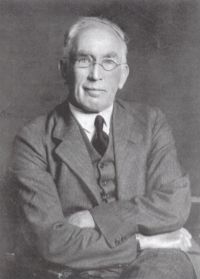
A. Mawer (1879-1942) published works such as The Vikings. These writings evoke Norse, Scandinavian and Vikings.
Quotes by A. Mawer
“ Our knowledge of the Viking movement was, until the last half-century, drawn almost entirely from the works of medieval Latin chroniclers, writing in monasteries and other kindred schools of learning which had only too often felt the devastating hand of Viking raiders. They naturally regarded them as little better than pirates and they never tired of expatiating upon their cruelty and their violence. It is only during the last fifty years or so that we have been able to revise our ideas of Viking civilisation and to form a juster conception of the part which it played in the history of Europe. ”
“ The condition of faith and belief in the Viking age was, then, chaotic, but, fortunately for purposes of clear statement, there was, to the Norse mind at least, no necessary connexion between beliefs and morality, between faith and conduct, and the ideas on which they based their philosophy and practice of life are fairly distinct.The central ideas which dominate the Norse view of life are an ever-present sense of the passingness of all things and a deep consciousness of the over-ruling power of Fate. All earthly things are transitory and the one thing which lasts is good fame. ”
Related articles
The enduring viking spirit: from plunder to profit in Dublin and London
The Norse trajectory from opportunistic raiders to urban developers in Ireland and England mirrors the organizational strategy required for competitive success in modern sports and business. Sustained achievement demands centralized tactical command, cohesive team execution, and a pivot from asset-stripping to long-term value creation.
From Fury to Founder, The Reinvention of the Viking
The feared pagan marauders of the early Middle Ages—whose dragon fleets inspired a prayer for divine deliverance—were systematically reimagined into pioneering explorers, astute traders, and foundational state-builders. This drastic reinvention reveals how history is constantly reshaped to serve modern needs.
