“ It grew as you never saw a swede grow before. It grew tall and strong and weedy. It lifted its green head and gazed round over No Man’s Land. Yes, man was gone, and it was the day of the swede. The storms were tremendous. Sometimes pieces of iron sang through its leaves. But man was gone and it was the day of the swede. A man used to come there once, a great French farmer, an oppressor of swedes. Legends were told of him and his herd of cattle, dark traditions that passed down vegetable generations. It was somehow known in those fields that the man ate swedes. ”
Swedes
Definition and stakes
The concept of "Swedes" encompasses both the cultural identity and national character of Sweden's inhabitants, examined through various literary perspectives. Authors such as Fredrika Bremer highlight Swedish resilience and tradition in communities abroad, while Bayard Taylor underscores their uniqueness as a people deeply connected to their northern heritage.
Victor Alfred Nilsson points to their pride in noble customs, and James Nasmyth commends their self-sufficiency and moral strength. These viewpoints together emphasize the Swedes’ lasting combination of independence, hospitality, and respect for their historical background, as mirrored in their literature and societal values.
Quotes about “Swedes”

Fredrika Bremer,
The Homes of the New World
(1853)
“ The sun set; but even here again all wore a northern aspect; it was cold and without that splendid glow of colouring which is so general in American sunsets. Returning to the log-house, we spent the evening, one and twenty Swedes altogether, in games, songs, and dancing, exactly as if in Sweden. I had during the whole time of my journey to the West, been conning over in my mind a speech which I would make to my countrymen in the West; I thought how I would bear to them a salutation from their mother country, and exhort them to create a new Sweden, in that new land! ”
Bayard Taylor,
Northern Travel: Summer and Winter Pictures of Sweden…
“ But how much better, to call themselves Swedes?—to preserve the fine, manly characteristics of their ancient stock, rather than imitate a people so alien to them in blood, in character, and in antecedents. ”
James Nasmyth, James Nasmyth, Engineer: An Autobiography
“ With their many virtues, the Swedes are a most self-helping people. They are hard-working and honest, true and straightforward. In matters of commerce they are men of their word. They are clear-headed, honest-minded, and keen in their desire for knowledge. Their natural simple common sense enables them to clear away all parasitical and traditional rubbish from their minds, and to stand before us as men of the highest excellence. All happiness and prosperity to dear old Sweden! ”
Bayard Taylor,
Northern Travel: Summer and Winter Pictures of Sweden…
“ I do not wish to be understood as saying a word in censure of that genial courtesy which is characteristic of the Swedes, not less of the bonder, or country farmers, than of the nobility. They are by nature a courteous people, and if, throughout the country, something of the primness and formality of ancient manners has been preserved, it the rather serves to give a quaint and picturesque grace to society. ”
“ The name of Sweden is not even mentioned, a fact which does not point to a narrow or antiquated form of patriotism. There is in the nature of the Swedes a tendency to delight in the display of dignified luxury, which was known to Tacitus. The Swedes love to see the crown of one of the oldest states of Europe carried with dignity as an emblem of their ancient independence. The Swedish king has in reality less power than the President of the United States, but the Swedes have an inherited faculty of confidence and loyalty of which their king receives his full share. ”
Fredrika Bremer,
The Homes of the New World
(1853)
“ Heartfelt kindness and hospitality, seriousness and mirth in pure family life; these characteristics of Swedish life, where it is good, should be transplanted into the Western wilderness by the Swedish colonists, as they are in this instance. That day among the Swedes by Pine Lake; that splendid old lady; those handsome, warm-hearted men; those lovely, modest, and kind young women; that affectionate domestic life; that rich hospitality in poor cottagers,—all are to me a pledge of it. The Swedes must continue to be Swedes, even in the New World ”
Anonymous, The Young Carpenters of Freiberg
“ The Swedes are no more Swedes than I am; else how could I have understood the oaths of the Swedish dragoon that fired at me to-day? He swore in good round German, and it was one of the most wonderful oaths I ever heard. He said'— The journeyman sprang up hastily, and put his hand before the lad's mouth. 'Silence!' he cried earnestly. 'Do not repeat the oath you heard to any one. When a man has once heard a wicked thing, it sticks in his memory for years. It is the good things we find so hard to remember. But to return to the Swedes. Their anger against us is not altogether without excuse. ”
Various, Popular Science Monthly (1907)
“ Here is the nature that the Swedes love so profoundly: the mountains in which are buried vast deposits of ore and fertilizing minerals, the woods and fields still unexhausted of their wealth, the waters with hidden incalculable energy. ”
Mary Wilhelmine Williams,
Cousin-hunting in Scandinavia
“ If you have ever read the history of Sweden—I fear you have not—you will remember that certain of the Swedes were always revolting against the established order of things. These were the Dalecarlians. Sometimes they were in the right, and other times they were not; but they never lacked the courage of their convictions. With sufficiently strong convictions always came revolt. ”
S. A. Dunham, History of Denmark, Sweden, and Norway…
“ Thus, in regard to the Swedes, we shall find their origin wrapt in an obscurity deep as that which covers the cradle of most other people. Many are the fables which grave historians, listening only to tradition, or wresting to a certain purpose the words of some obscure writer, or confounding the actions of many people, or misled by a fancied analogy and similarity of names, have perpetuated on this subject. ”
“ The Swedes become excellent citizens of a republic for that very reason: reverence for, and loyalty to, the institutions and historial development of the country in which they dwell. Among the Scandinavian nationalities, the Swede has been characterized as the nobleman or aristocrat, on account of his love of luxury and the joys of life, his dignity, diplomatic talent and lyrico-rhetoric temperament. It is true that his dignity seldom forsakes the Swede ”
Bayard Taylor,
Northern Travel: Summer and Winter Pictures of Sweden…
“ No amount of renown, nor even the sanctity which death gives to genius, can prevent a certain class of them from exhibiting the vices and weaknesses of their countrymen. Much the severest things which I heard said about Sweden, were said by Swedes themselves, and I was frequently obliged to rely upon my own contrary impressions, to protect me from the chance of being persuaded to paint things worse than they really are. ”
S. A. Dunham, History of Denmark, Sweden, and Norway…
“ The kings of the Swedes are not what they once were. My grandfather could remember Eric the son of Emund, when in the vigour of manhood. That king, each summer, undertook some warlike expedition, adding to his empire Finland, Carelia, Esthonia, Courland, and other regions,—exploits of which the lofty mounds visible at this day are triumphant proofs ”
Selma Lagerlöf,
The Wonderful Adventures of Nils
“ This is the heart of your country, Clement. All the change you have in your pocket is coined here, and the postage stamps you stick on your letters are made here. There is something here for every Swede. Here no one need feel homesick, for here all Swedes are at home."And when you read of all that has been brought here to Stockholm, think too of the latest that the city has attracted to itself: these old-time peasant cottages here at Skansen; the old dances; the old costumes and house-furnishings; the musicians and story-tellers. ”
Friedrich Schiller,
The Works of Frederick Schiller
“ Supported by three regiments of cavalry, the vanquished brigades, forming anew, faced the enemy, and pressed vigorously into the broken ranks of the Swedes. A murderous conflict ensued. The nearness of the enemy left no room for fire-arms, the fury of the attack no time for loading; man was matched to man, the useless musket exchanged for the sword and pike, and science gave way to desperation. Overpowered by numbers, the wearied Swedes at last retire beyond the trenches; and the captured battery is again lost by the retreat. ”
Bayard Taylor,
Northern Travel: Summer and Winter Pictures of Sweden…
“ Those meaningless social courtesies which sit well enough upon the gay, volatile, mercurial Frenchman, seem absurd affectations when practiced by the tall, grave, sedate Scandinavian. The intelligent Swedes feel this, but they are powerless to make headway against the influence of a court which was wholly French, even before Bernadotte's time. "We are a race of apes," said one of them to me bitterly. Gustavus III. was thoroughly French in his tastes, but the ruin of Swedish nationality in Stockholm was already commenced when he ascended the throne. ”
William Liddle, Peeps at Many Lands: Sweden
“ The Swedes are very fond of open-air life. They practically spend the summer out of doors. Where you find a band, there is usually a large crowd of men, women, and children, sitting at little tables drinking their punch, beer, and coffee. The Swedes are very fond of family life. The father, mother, and children usually go out together. On Sunday afternoons and feast-days every town is a [Pg 61] scene of gaiety. All the inhabitants give themselves up to pleasure. There is no rowdyism, but a great deal of enjoyment. ”
William Liddle, Peeps at Many Lands: Sweden
“ In many places you come across beautiful castles containing great treasures which Gustavus and his Generals brought home from the war. These were days when the Swedes were known everywhere as heroes in the battle-field. Now, you do not think of them so much as a warlike nation, but as one peaceful and industrious, seeking to win honour [Pg 11] and renown in the more peaceful field of science, industry, and art. The poet Tegner says:“We have conquered a world at the point of our sword,Let us now win the world by our song and our thought.” ”
“ The Swedish language seems to be based chiefly upon the dialect of Sœdermanland, with influences from other dialects. Among the Scandinavian languages, Swedish ranks next to the Icelandic in point of purity, and is the foremost of them all in point of beauty.The Swedes are a hardworking, industrious and intelligent race, not fully conscious of their own rich endowment and slow to push their individual claims. In moments of danger and distress, this people give evidence of an active heroism, which offers a great contrast to their usual quiet and peaceful demeanor. ”
Fredrika Bremer,
The Homes of the New World
(1853)
“ During this day I put some questions to all the Swedes whom I met regarding the circumstances and the prospects of the Swedes in this new country, as compared with those of the old, and their answers were very nearly similar, and might be comprised in the following: “If we were to work as hard in Sweden as we do here, we should be as well off there, and often better. “None who are not accustomed to hard, agricultural labour ought to become farmers in this country. ”
William Liddle, Peeps at Many Lands: Sweden
“ Another name that is honoured by every true Swede, and by many who are not Swedes, is Gustavus Adolphus I. He is chiefly and justly held in honour because of what he did for the Protestant cause [Pg 6] in Europe. The Protestant Princes had lost heart, as they had suffered very much at the hands of Generals Tilly and Wallenstein. Gustavus resolved to go to the aid of the Princes. With only 13,000 Swedes he set sail, but as soon as he reached Germany, large numbers of men joined his army. ”
Georg Brandes,
Eminent Authors of the Nineteenth Century…
“ The Swedes love what looks well, and understand better than the Danes and the Norwegians how to make advantageous arrangements; in customs, social life and speech, they have more form and, at the same time, a more formal manner than other Scandinavians. Their language itself is ceremonious; the word "you" is wholly lacking as a mode of polite address, so that the name or title of the person addressed must be incessantly repeated. ”
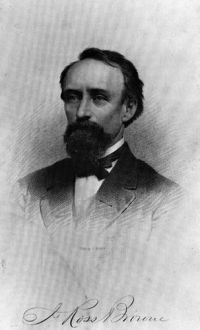
J. Ross Browne,
The Land of Thor
“ In a word, the Swedes are an honest, straightforward, sterling people, resembling more, in certain points of character, the English than any of their Continental neighbors, though I must do them the [289] justice to say that they rarely have so unpleasant a way of manifesting their best traits. I can readily believe that the longer they are known the better they may be liked. ”
Various, The Book of History (Vol. 1 of 18… (1921)
“ Natives of Sweden, a branch of the Scandinavian stock. They seem to have been originally a Teutonic race, who entered Northern Sweden about 3,000 years ago, and drove out the aboriginal Lapps and Finns. The inhabitants of Southern Sweden were called Goths, and may have been the ancestors of the Teutonic Goths. In time they amalgamated with the Swedes, and formed one nation, which has been an independent kingdom through most of the Christian era. The Swedes are warlike, and successful in commerce and industry; they make good sailors, and possess a considerable literature. ”
James Augustus St. John, The Lives of Celebrated Travellers…
“ Still further to extend their influence, they sometimes amused themselves with teaching a select portion of the youth of both sexes the French and German languages; and as ingenuous youth has all the world over a reverence for those who introduce it into the paths of knowledge, the purpose of the Swedes was amply accomplished, and they enjoyed the affection of powerful and honourable friends. ”
Fridtjof Nansen,
In Northern Mists: Arctic Exploration in Early Times…
“ Swedes in North Sweden use the word “goveiter.” The mound-elf (“haugebonden”) , Old Norse “haugbui” (the dweller in the mound) , who was the ancestor of the clan, or the representative of the departed generations, is called in Nordland “godbonden.” [359] The underground people are called in Iceland “ljúflingar,” in German “die guten Leute,” in English-speaking Ireland, Scotland and the Isle of Man “the good people,” “good neighbours,” or “the men of peace.” ”
William Liddle, Peeps at Many Lands: Sweden
“ The Swedes are very demonstrative, and speed the parting guest with waving of handkerchief until he is out of sight, although he may be returning in a few hours.As the steamer passes through Lake Malar, [Pg 27] towards Stockholm, the interest ever increases, as on its shores you see towns and villages, old castles and modern villas, farm and meadow alternating with huge masses of rock, while ever and anon you meet steamers and sailing-ships on their way to and from the sea. At last the towers and spires of Stockholm are in sight. ”
Paul B. Du Chaillu, The Viking Age. Volume 2 (of 2…
“ The numerous English coins found there and in Sweden, show that the Swedes, and the people inhabiting the islands of the Baltic, were a seafaring people, and were constantly engaged in trading and warlike expeditions to England; in a word, they must have formed a great part of the host that made warfare in Western Europe. The runic stones which have been raised to the memory of those who have died in foreign lands are found almost if not entirely in Sweden. ”
Bayard Taylor,
Northern Travel: Summer and Winter Pictures of Sweden…
“ Swedish tongue, and to exchange the indifference and reserve of Norway for the friendly, genial, courteous manner of Sweden. What I have said about the formality and affectation of manners, and the rigidity of social etiquette, in the chapters relating to Stockholm, was meant to apply especially to the capital. Far be it from me to censure that natural and spontaneous courtesy which is a characteristic of the whole people. The more I see of the Swedes, the more I am convinced that there is no kinder, simpler, and honester people in the world. ”
William Liddle, Peeps at Many Lands: Sweden
“ A large number of the thin, short logs are sent to Britain to be props in the pits. Perhaps, when you are travelling in the train, the sleepers on which the rails are laid may have come from Sweden. A great deal of the timber is crushed into pulp, and then used for the making of paper. The Swedes make doors and windows for us. They even export wooden houses. ”
Anonymous, The Young Carpenters of Freiberg
“ Their general is their god, and they follow him or desert him just according as he leads them to victory and plunder, or to defeat. They march from country to country, selling their services to whichever side they think will give them the richest booty. Swedes! I can assure you, there is not a Swede left in the Swedish army, or, at all events, very few. ”
William Seymour Edwards,
Through Scandinavia to Moscow
“ Our friends here pointed out to us where it was that Charles X of Sweden, and his army of foot and horse and guns made their dare-devil passage on the ice that night in January, 1658, crossing the Little and Big Belts to Zealand and Copenhagen, forcing the beaten Danes by the Peace of Roskilde to cede the great Provinces of Skaania, Halland and Bleking, which made Sweden forever henceforth a formidable European state,—“God’s work,” the Swedes declared, for these salty waters were never before frozen solid enough to bear an army’s weight,—nor have they been since. ”