AI-generated from sources
From Fury to Founder, The Reinvention of the Viking
In Brief
- The initial perception of Vikings as brutal pagan marauders was largely shaped by monastic chroniclers who were their victims, influencing historical narratives for centuries.
- Modern scholarship, propelled by archaeology and philology, has revealed a more nuanced view of Vikings as sophisticated traders, pioneering explorers, and foundational state-builders.
- Viking incursions, though destructive, inadvertently catalyzed political consolidation in regions like England and played a key role in the formation of states such as the Kievan Rus'.
- Contemporary Scandinavian nations have selectively re-appropriated the Viking image as a powerful cultural symbol embodying national pride, courage, and industriousness, often minimizing their historical violence.
Main authors
For centuries, the dominant image of the Norse people of the early Middle Ages was one of unmitigated terror. The appearance of their distinctive dragon-prowed ships on the coasts of Europe signaled pillage and destruction, a perception indelibly etched into the historical record by those who suffered their raids [1, 5]. This initial narrative, born from the fear of coastal communities and the lamentations of monastic chroniclers, cast the Viking as a quintessential barbarian—a 'heathen' whose primary contributions were chaos and the burning of civilized institutions [2, 4]. The litany, "From the fury of the Northmen save us, Lord," encapsulates the visceral dread they inspired, cementing a one-dimensional portrait that would endure for nearly a millennium [3].
Yet, this depiction represents only the first chapter in a long and complex historiographical evolution. The figure of the Viking has been systematically re-examined and, in many ways, reinvented, reflecting shifts not only in scholarly methods but also in the cultural needs of later societies. Over time, the marauder has been supplanted by the explorer, the trader, the state-builder, and ultimately, the national ancestor [13, 17]. This transformation from a symbol of savage destruction to one of pioneering spirit and proud heritage reveals how historical memory is constructed and reconstructed, with each era finding in the Viking past a reflection of its own values and aspirations [22, 27].
The Fury of the Northmen
The historical reputation of the Vikings was forged in violence beginning in the late 8th century, when their fleets emerged as a terrifying new force in Western Europe . Their raids were characterized by what contemporary observers described as 'unbridled ferocity', often targeting the symbols of the established Christian order, such as churches and convents . This targeting of religious centers, which were also repositories of wealth, created a powerful narrative of pagan savagery and a perceived assault on civilization itself, a view that profoundly shaped all early accounts of their activities .
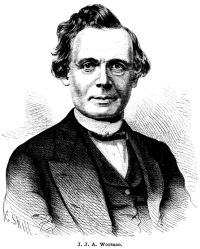
This initial and long-dominant image was almost exclusively constructed by the victims of these incursions, particularly the literate clergy within monasteries . Their chronicles, written from a perspective of trauma and loss, naturally emphasized the Vikings' cruelty and their seemingly insatiable appetite for plunder . As A. Mawer observes, these writers saw them as little more than pirates. This perspective, while reflecting a genuine historical experience, created a powerful and enduring stereotype that overshadowed any other aspect of Norse society . Later scholars like Jens Jacob Asmussen Worsaae would recognize that these monkish chronicles were colored by both fear and hatred, making them an unreliable foundation for a complete understanding [12].
The impact of this period of raiding was not limited to localized destruction; it reshaped the political map of Europe. On the continent, the relentless pressure of Viking invasions is seen as a key factor in the fracturing of Charlemagne's empire into smaller feudal states [6]. In England, the constant threat had a paradoxical effect, forcing disparate Anglo-Saxon groups to overcome their particularism and unite under a single line of kings capable of mounting a sustained defense . The Vikings were therefore not just a destructive force but also an unwitting catalyst for political consolidation and state formation among their adversaries.
Beyond the Barbarian Stereotype
The monolithic image of the Viking barbarian began to be dismantled in the late 19th and early 20th centuries, as a new wave of scholarship brought fresh methodologies to the study of the era . A critical re-evaluation of sources was propelled by advances in philology, the study of language in historical texts. Researchers such as Gudbrand Vigfusson and Sophus Bugge uncovered deep and permeating traces of Celtic and Anglo-Saxon cultural elements within Old Norse literature and language, suggesting a far more complex tapestry of interaction, exchange, and influence than the simple narrative of violent conquest allowed [7].
This academic revisionism gained significant momentum from the field of archaeology [8]. While sagas and chronicles offered literary—and often biased—portraits, archaeological finds provided a vast body of concrete, material evidence . The excavation of ships, settlements, tools, and burial sites allowed for a more objective reconstruction of the material civilization of the Viking Age. This tangible evidence helped scholars to form a more just and nuanced conception of Norse society, moving beyond the polemics of their clerical adversaries .
The resulting picture is of a people in a dynamic state of transition. While certain aspects of their society retained elements of what could be termed 'barbarism', in other areas, such as social organization, trade, and the arts of war, they were significantly advanced compared to many of their European contemporaries [10]. Their mythology points not merely to a warrior ethos but also to a sophisticated intelligence and a profound worldview [9]. Furthermore, they were not an isolated people. The Viking raider was often accompanied or followed by the merchant, and eventually, with the adoption of Christianity, was replaced by the pilgrim and the crusader, all of whom connected the Nordic world to the great centers of culture and brought new ideas back home [11].
Pioneers of Exploration and Statecraft
Beyond their role as raiders, the Vikings can be understood as the vanguard of medieval Europe's first great age of expansion . They embodied, as C. Raymond Beazley puts it, the 'highest type of explorers' because their journeys were not merely for discovery or trade but were intrinsically linked to conquest and colonization . This drive pushed them across the known world and into uncharted territories. Their exploratory zeal led them to settle Iceland and Greenland, and most remarkably, to make landfall in North America five centuries before Columbus, giving them a familiarity with continents unknown to the rest of Europe [15].
The Vikings' impact was not just geographical but profoundly political, as they proved to be formidable state-builders. During the 9th and 10th centuries, they established Scandinavian rule across a wide arc, from Ireland and the English Danelaw to Normandy in France [14, 19]. Perhaps their most significant and lasting political creation was in the east, where Scandinavian princes and their followers established the Kievan Rus', laying the foundation for the future Russian state [20]. As Hjalmar Hjorth Boyesen argued, their capacity for disciplined organization and voluntary subordination for mutual benefit represented a crucial contribution to the political development of Europe .
Economic and cultural integration were also key features of the Viking expansion. Trade developed in parallel with military activities, with Norse merchants establishing important commercial hubs on the Baltic and beyond [16]. Upon settling in new territories, they demonstrated a remarkable capacity for adaptation. Analysis of coinage from their settlements in England shows a rapid application to the arts, suggesting an eagerness to rival their Saxon neighbors in peaceful and productive occupations [18]. Often, the motivation for settlement was a simple need for land, a process that frequently involved accepting Christianity as a condition of integrating into the societies they had once only pillaged .
The Viking as a Modern Icon
In the modern era, the re-evaluated Viking has been embraced as a powerful cultural symbol, particularly in the Scandinavian nations. The historical legacy of the Vikings has become a source of romance and national pride, stimulating widespread interest in antiquarian research and shaping a distinct cultural identity [21]. This ancestral figure has been repurposed to embody contemporary ideals, with the 'Viking spirit' invoked to represent courage, noble idealism, and the industriousness needed to build prosperous modern states [26]. This identity is not merely abstract; it is actively celebrated through symbolic acts, such as the 19th-century construction of a replica Viking ship that sailed across the Atlantic, a pointed demonstration of Norwegian heritage and seafaring prowess [23].
This modern appropriation of the Viking image is, however, a highly selective process. The construction of a heroic ancestor often involves overlooking or minimizing the more destructive aspects of their history. Some nationalist antiquarian traditions, for instance, have credited Scandinavian invaders with artistic achievements while conveniently ignoring the devastation they wrought upon native cultures [24]. This re-imagining allows for the transformation of historical figures to suit present-day narratives, as seen when the aggressive pagan Viking is recast as a pioneer with a Christianized spirit of building and cultivation . The Viking archetype is even used to draw distinctions between the modern national characters of the Scandinavian peoples themselves [25].
Ultimately, the evolution of the Viking's reputation reveals the subjective and constructed nature of historical memory . The past is not a fixed and objective reality but is continually reinterpreted through the lens of present-day concerns. As Walter Lippmann noted, concepts of 'Historic Rights' are rarely neutral perspectives . The earliest accounts of the Vikings were products of a pre-modern world where tradition valued entertainment and moral lessons over factual accuracy [28]. Similarly, the modern embrace of the Viking as a noble ancestor says as much about contemporary needs for identity and inspiration as it does about the historical reality of the 9th century. The Viking remains a figure continually being rebuilt to serve the present.
The historical journey of the Viking's image is one of radical transformation. The figure that once provoked prayers for divine deliverance has evolved from a terrifying pagan marauder into a multifaceted historical actor . Initially defined almost exclusively by the clerical victims of their raids, the Viking was long seen as a purely destructive force, an enemy of civilization . However, modern scholarship, powered by disciplines like archaeology and philology, has chipped away at this monolithic stereotype to reveal a complex society of pioneering explorers, pragmatic traders, and foundational state-builders whose influence stretched from North America to Russia .
This profound shift in perception illustrates that history is not simply the study of a static past, but an ongoing dialogue between the present and the traces left behind. The modern reinvention of the Viking as a symbol of national pride or an embodiment of adventurous idealism reflects contemporary society's tendency to seek ancestors who can validate current values . The story of how we have viewed the Viking is therefore also a story about ourselves—about how we construct narratives, selectively remember, and project our own identities onto the figures of the past, ensuring that history remains a living and continuously contested field .