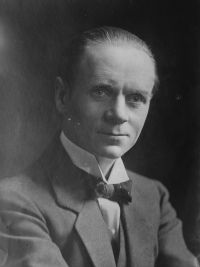
Norman Angell

Norman Angell

Summary

Portrait of Norman Angell Norman Angell The Great Illusion

How have conditions so changed that terms which were applicable to the ancient world—in one sense at least to the mediæval world, and in another sense still to the world of that political renaissance which gave to Great Britain its Empire—are no longer applicable in any sense to the conditions of the world as we find them to-day? How has it become impossible for one nation to take by conquest the wealth of another for the benefit of the people of the conqueror?
Source: Gutenberg

Portrait of Norman Angell Norman Angell The Great Illusion

In the same way, when we prevent the brigand from carrying on his trade—taking wealth by force—it is not because we believe in force as a means of livelihood, but precisely because we do not. And if, in preventing the brigand from knocking out brains, we are compelled to knock out his brains, is it because we believe in knocking out people's brains? Or would we urge that to do so is the way to carry on a trade or to govern a nation or that it could be the basis of human relationship?
Source: Gutenberg

Portrait of Norman Angell Norman Angell The Great Illusion

Is it for nothing that the splendid Scandinavian race, who have converted their rugged and rock-strewn peninsula into a group of prosperous and stable States, which are an example to Europe, and have infused the great Anglo-Saxon stock with something of their sane but noble idealism, have the blood of Vikings in their veins? Is there no place for the free play of all the best qualities of the Viking and the soldier in a world still sadly in need of men with courage enough, for instance, to face the truth, however difficult it may seem, however unkind to our pet prejudices?
Source: Gutenberg

Get perspective with Kwize: daily news enlightened by great literature