Summary

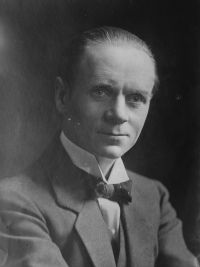
Portrait of Norman Angell Norman Angell Peace Theories and the Balkan War

As between war and peace we have made our choice, and having made it, stick to it. There may be something to be said for war—for settling a thing by fighting about it instead of by understanding it,—just as there may be something to be said for the ordeal, or the duel, as against trial by evidence, for the rack as a corrective of religious error, for judicial torture as a substitute for cross-examination, for religious wars, for all these things—but the balance of advantage is against them and we have discarded them.
Source: Gutenberg

Portrait of Norman Angell Norman Angell Peace Theories and the Balkan War

The answer is to be found in the Chancelleries of Europe, among the men who have too long played with human lives as pawns in a game of chess, who have become so enmeshed in formulas and the jargon of diplomacy that they have ceased to be conscious of the poignant realities with which they trifle. And thus will war continue to be made, until the great masses who are the sport of professional schemers and dreamers say the word which, shall bring, not eternal peace, for that is impossible, but a determination that wars shall be fought only in a just and righteous and vital cause.
Source: Gutenberg

Portrait of Norman Angell Norman Angell Peace Theories and the Balkan War

It is a curious fact that the moral and intellectual interdependence of States preceded by a long period, that material and economic independence which I have tried recently to make clear. Nothing is more contrary to fact than to suppose that any considerable movement of opinion in Europe can be limited to the frontiers of one nation. Even at a time when it took half a generation for a thought to travel from one capital to another, a student or thinker in some obscure Italian, Swiss or German village was able to modify policy, to change the face of Europe and of mankind.
Source: Gutenberg

Get perspective with Kwize: daily news enlightened by great literature