“ Bertha agreed eagerly with the Lieutenant, declaring that a daughter of an ancient and noble race might be pardoned for yielding, in a moment of weakness, to an impulse of the heart, in bestowing her love upon a man her inferior in rank, but that she acted unpardonably in degrading herself and her family by a marriage with this inferior, especially if he were poor. There was only one thing which could justify such a mésalliance, and that was immense wealth on the part of the inferior in rank,--wealth that could reinstate in splendour an impoverished family of noble descent. ”
Quotes about “mésalliance”
 Friedrich Schiller,
The Death of Wallenstein
Friedrich Schiller,
The Death of Wallenstein
“ The enmity of sects, the rage of parties, Long-cherished envy, jealousy, unite;' And all the struggling elements of evil Suspend their conflict, and together league In one alliance 'gainst their common foe— The savage beast that breaks into the fold, Where men repose in confidence and peace. For vain were man's own prudence to protect him. 'Tis only in the forehead nature plants The watchful eye; the back, without defence, Must find its shield in man's fidelity. TERZKY. Think not more meanly off thyself than do Thy foes, who stretch their hands with joy to greet thee. ”
 Jean-Baptiste Massillon,
Sermons
(1879)
Jean-Baptiste Massillon,
Sermons
(1879)
“ O divine Reconciliator of men! return then once more upon the earth, since the peace which thou broughtest to it at thy birth still leaves so many wars and so many calamities in the universe! Nor is this all: that circle itself, which unites us under the same laws, unites not the heart and affections; hatred and jealousies divide citizens equally as they divide nations; animosities are perpetuated in families, and fathers transmit them to their children, as an accursed inheritance. ”
Jean-Baptiste Massillon,
Sermons
(1879)
“ He is come to bring peace to us; he hath left it to us as his inheritance; nothing hath he so strongly recommended to us as that of loving each other; yet fellowship and peace seem as if banished from among us, and hatred and animosity divide court, city, and families; and those whom the offices, the interests of the state, decency itself, and blood, ought, at least, to unite, — tear, defame, would wish to destroy, and to exalt themselves on the ruins of each other: and religion, which shows us our brethren even in our enemies, is no longer listened to ”
 Lajos Kossuth,
Select Speeches of Kossuth
Lajos Kossuth,
Select Speeches of Kossuth
“ Extend the principles of that alliance, and the nations are no more. There are only kings. It divides society horizontally, and leaves the sovereigns above, and all the people below; it sets up the one above all rule, all restraint, and puts down the others to be trampled beneath our feet. ”
I. H. Bates, The Ultimate Triumph of Just Principles (1861)
“ Wherever they meet, whether in a conflict between different nations or different parts of the same nation, one or the other must peaceably yield, or the strife must be settled in blood or, what is still worse, a disgraceful compromise. The last has been the mode in our own country until this glorious day. The various forms of contention, from the petty lawsuit up to the shock of armies, are only so many struggles for existence and influence between great and opposing principles—only parts of that sublime battle between right and wrong. ”
Henry Giles, Unitarianism Defended
“ From these we had the hatred one nation against another, men arrayed against each other to hew each other down, doing all iniquities, when interest or ambition called for them, enslaving one another, and selling one another, unmindful of all the claims of fraternity in the din of faction, and losing the sense of their common humanity in the difference of clime or the colour of the skin. ”
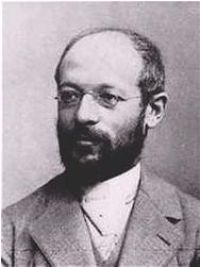 Georg Simmel,
The American Journal of Sociology…
Georg Simmel,
The American Journal of Sociology…
“ How often political groups, torn by internal dissensions, have faced the alternative of war against others, which might either cause domestic quarrels to be forgotten, or might on the contrary aggravate them beyond reconciliation! ”
George Spring Merriam, The Negro and the Nation
“ If you are still dissatisfied, yet is it not better to bear the evils that we have than fly to others that we know not of? Nay, do we not too well know, and surely if dimly foresee, the terrific evils which must attend the attempted disruption of this nation?"A nation it is, and not a partnership. A nation, one and inseparable, we propose that it shall continue. We deny that the founders and fathers ever contemplated a mere temporary alliance dissoluble at the caprice of any member. ”
P. V. N. Myers, A General History for Colleges and High Schools…
“ The long conflict of a century and more, and the vicissitudes of fortune, which to-day gave one party the power of the persecutor and to-morrow made the same sect the victims of persecution, had simply forced all to the practical conclusion that they must tolerate one another,—that one sect must not attempt to put another down by force. ”
Various, The Southern Literary Messenger…
“ In every case in which an integral community, whether consolidated or confederate, has been separated, it has been by violence, and commonly external violence—either by one nation, subjugating another, or by some successful leader succeeding by his arts and talents in arraying one part against the rest: or the parts of a great empire have been partitioned among the descendants or legatees of the last occupant—none of which causes of separation can be expected to operate here. ”
 François Rabelais,
Gargantua
(1653)
François Rabelais,
Gargantua
(1653)
“ And if, by rash and heady counsel, they have attempted any new design against them, as soon as they heard the name and title of your alliance, they have suddenly desisted from their enterprises. What rage and madness, therefore, doth now incite thee, all old alliance infringed, all amity trod under foot, and all right violated, thus in a hostile manner to invade his country, without having been by him or his in anything prejudiced, wronged, or provoked? Where is faith? Where is law? Where is reason? Where is humanity? Where is the fear of God? ”
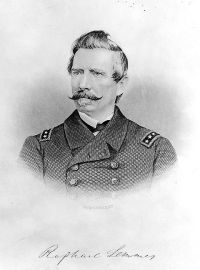 Raphael Semmes,
Memoirs of Service Afloat, During the War Between the States
Raphael Semmes,
Memoirs of Service Afloat, During the War Between the States
“ Whenever it shall appear, that these causes are radical, and permanent, a separation by equitable arrangement, will be preferable to an alliance, by constraint, among nominal friends but real enemies, inflamed by mutual hatred, and jealousy, and inviting, by intestine divisions, contempt and aggressions from abroad. ”
 Hermann Hagedorn,
Makers of Madness
Hermann Hagedorn,
Makers of Madness
“ The peace propagandists are after him. Mediation is the magic word. Mediation—by which the neutral nations block our legitimate road to victory for their own benefit, in the name of civilization and progress. ”
A Biography of Henry Clay, the Senator from Kentucky
“ How long was it, even with a clear perception of that danger, before an effective coalition could be formed? How often did one power stand by, unmoved and indifferent to the fate of its neighbor, although the destruction of that neighbor removed the only barrier to an attack upon itself? ”
 Friedrich von Schlegel,
The philosophy of life, and philosophy of language…
Friedrich von Schlegel,
The philosophy of life, and philosophy of language…
“ The second remark I have to make applies to ourselves and all the well-disposed among our cotemporaries, and refers to the disunion which subsists in these evil times even among the best of men. Were two nations threatened in common by a formidable enemy, would they not, however widely they might differ in, or perhaps be estranged from each other by their respective constitutions languages, and customs, forget in the moment of danger their characteristic differences, and, laying aside all previous feelings of jealousy or estrangement, unite for their mutual protection and safety? ”
 Samuel Johnson,
The Works of Samuel Johnson, LL.D. Volume 10
Samuel Johnson,
The Works of Samuel Johnson, LL.D. Volume 10
“ The use of alliances, sir, has, in the last age, been too much experienced to be contested; it is by leagues well concerted, and strictly observed, that the weak are defended against the strong, that bounds are set to the turbulence of ambition, that the torrent of power is restrained, and empires preserved from those inundations of war, that, in former times, laid the world in ruins. By alliances, sir, the equipoise of power is maintained, and those alarms and apprehensions avoided, which must arise from daily vicissitudes of empire, and the fluctuations of perpetual contest. ”
 Sarah Stickney Ellis,
The Daughters of England
(1842)
Sarah Stickney Ellis,
The Daughters of England
(1842)
“ What should we think of a community of slaves, who betrayed each other's interests 1 of a little band of shipwrecked mariners upon a friendless shore, who were false to each other? of the inhabitants of a defenceless nation, who would not unite together in earnestness and good faith against a common enemy? We are accustomed to hear of the meanness of the powerful, when they forsake the weak; but there is a meanness of a lower grade—when the weak forsake each other. ”
 Daniel Defoe,
The Shortest-Way with the Dissenters
Daniel Defoe,
The Shortest-Way with the Dissenters
“ We make no question but we are able to deal with this common enemy without their help: but why must we unite with them, because of the enemy? Will they go over to the enemy, if we do not prevent it, by a Union with them? ”
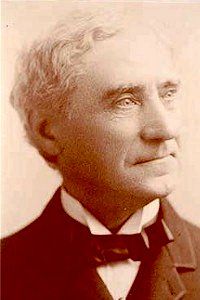 Octavius Brooks Frothingham,
Recollections and Impressions, 1822-1890
Octavius Brooks Frothingham,
Recollections and Impressions, 1822-1890
“ It is a very mysterious thing in history, this alliance between the most turbulent and the most tyrannical, the most depraved and the most despotic portions of society. The most undisciplined, barbarous, savage members of a community are ever in a league with the most overbearing, insolent, imperious, and domineering members of it. ”
 Jefferson Davis,
Speech to the Mississippi State Democratic Convention
(1859)
Jefferson Davis,
Speech to the Mississippi State Democratic Convention
(1859)
“ If I may use the form of interrogation, is it not because I am prone to despair of the Republic, but because we are necessarily cognizant of the fact that the unity of the people of the States is disturbed by a sectional, fanatical hostility, as irrational as it is vicious. ”
Graf von Johann Heinrich Bernstorff, My Three Years in America
“ I am proposing that all nations henceforth avoid entangling alliances which would draw them into competitions of power, catch them in a net of intrigue and selfish rivalry, and disturb their own affairs with influences intruded from without. There is no entangling alliance in a concert of power. ”
Le Page du Pratz, The History of Louisiana, Or of the Western Parts of Virginia and Carolina
“ When a nation finds itself no longer able to oppose its enemy, the chiefs send a pipe of peace to a neutral nation, and solicit their mediation, which is generally successful, the vanquished nation sheltering themselves under the name of the mediators, and for the future making but one nation with them. ”
 Harriet Martineau,
Illustrations of Political Economy…
(1834)
Harriet Martineau,
Illustrations of Political Economy…
(1834)
“ Men of the same country, members of the same social state, had been made enemies by arbitrary laws. They had been trained to deceive and to defy one another when they should have wrought, side by side, to nourish life instead of to destroy it,--to strengthen peace instead of inflicting woe. ”
 Boyd Winchester,
The Swiss Republic
(1891)
Boyd Winchester,
The Swiss Republic
(1891)
“ The main line of separation is the same perplexing issue running through all political history, the rivalry between the state and nation, one seeking to minimize, the other to magnify the sphere of the central government. ”
Friedrich Schiller,
The Thirty Years War — Volume 01
“ The differences of government, of laws, of language, of manners, and of character, which hitherto had kept whole nations and countries as it were insulated, and raised a lasting barrier between them, rendered one state insensible to the distresses of another, save where national jealousy could indulge a malicious joy at the reverses of a rival. ”
Samuel Johnson,
The Works of Samuel Johnson, LL.D. Volume 10
“ When our ancient allies, who had been so often succoured with our treasure, and defended by our arms, had entered into such engagements; when it was stipulated not only to impoverish but enslave us; not only to weaken us abroad, but to deprive us of every domestick comfort; when a scheme was formed that would have spread misery over the whole nation, and have extended its consequences to the lowest orders of the community, it was surely necessary to frustrate it by some alliance, and with whom could we then unite, but with France? ”
A Source Book of Australian History
“ But all through this great, this noble, this successful effort, we have had different sources of irritation, of bad neighbourhood, of turmoil, of aggression, which, if they were to go on, must make these co-terminous communities instead of being one people of one blood, one faith, one jurisprudence, one in the very principles of civilization themselves—instead of that must make us cavilling, disputatious, foreign countries. ”
Adam Ferguson, An Essay on the History of Civil Society…
“ The sense of a common danger, and the assaults of an enemy, have been frequently useful to nations, by uniting their members more firmly together, and by preventing the secessions and actual separations in which their civil discord might otherwise terminate. ”
Samuel Johnson,
The Works of Samuel Johnson, LL.D. Volume 10
“ As in private life, my lords, when two friends carry any dispute between them to improper degrees of anger or resentment, it is the province of a third to moderate the passion of each, and to restore that benevolence which a difference of interest or opinion had impaired; so in alliances, or the friendships of nations, whenever it unhappily falls out that two of them forget the general good, and lay themselves open to those evils from which a strict union only can preserve them, it is necessary that some other power should interpose, and prevent the dangers of a perpetual discord. ”
 G. P. R. James,
Richelieu: A Tale of France, v…
G. P. R. James,
Richelieu: A Tale of France, v…
“ Religious and political differences had caused disunion between man and man, had banished mutual confidence and social intercourse, and raised up those feuds and hatreds, which destroy domestic peace, and retard public improvement. ”
 Benson John Lossing,
Washington and the American Republic…
Benson John Lossing,
Washington and the American Republic…
“ It evinces a disposition to separate the people from their government; to persuade them that they have different affections, principles, and interests, from those of their fellow-citizens whom they themselves have chosen to manage their common concerns, and thus to produce divisions fatal to our peace. ”
L. Oppenheim, International Law. A Treatise. Volume 2…
“ And the natural jealousy between the members of the Family of Nations, their conflicting interests in many points, and the necessity of a balance of power, are factors of sufficient strength to check the political dangers which such alteration of the ends of a war may eventually involve. ”
T. M. Harris, Assassination of Lincoln: a History of the Great Conspiracy
“ When two governments, foreign to each other, are at war, or when a civil war becomes territorial, all of the people of the respective belligerents become by the law of nations the enemies of each other. ”
 Maurice Maeterlinck,
The Unknown Guest
Maurice Maeterlinck,
The Unknown Guest
“ Is any alliance between the two opposing forces for ever impossible so long as we are in the flesh? What are we to do meanwhile? If a choice be inevitable, which way will our choice incline; and which victim shall we sacrifice? ”
Jonathan Elliot, Debates in the Several State Conventions on the Adoption of the Federal Constitution (1907)
“ That it was of the utmost consequence to bring the parties together; as, should we sever from each other, either no foreign power will ally with us at all, or the different states will form different alliances, and thus increase the horrors of those scenes of civil war and bloodshed, which, in such a state of separation and independence, would render us a miserable people. ”
 Herbert Spencer,
Popular Science Monthly
(1881)
Herbert Spencer,
Popular Science Monthly
(1881)
“ Here we have simply to note that, as in preceding cases, the component groups being favorably circumstanced for severally maintaining their independence of one another, the imperative need for union against enemies initiated a rude compound headship, which, notwithstanding the centralizing effects of war, tended to maintain itself in one or other form. On finding allied results among men of a different race but occupying a similar region, doubts respecting the process of causation must be dissipated. ”
Rudolf von Jhering, The Struggle for Law — Chapter IV (1872)
“ If the latter may summon him to fight a foreign enemy and to risk his life in battle with him; if it be every one’s duty to defend the common interests of the country, when attacked from without, why should not all courageous and well-minded men unite to resist the enemy at home? ”
Moulavi Gerágh Ali, A Critical Exposition of the Popular 'Jihád'…
“ It is a law and requisite of civilized existence that men live in political continuous societies, forming organized units called states or nations, whose constituents bear, enjoy and suffer, advance and retrograde together, in peace and in war. The citizen or native of hostile country is thus an enemy, as one of the constituents of the hostile state or nation, and as such is subjected to the hardships of war. ”
 Thomas Jefferson,
Memoir, Correspondence, and Miscellanies…
Thomas Jefferson,
Memoir, Correspondence, and Miscellanies…
“ Either all intercourse must cease between neutrals and belligerents, or all be permitted. Can the world hesitate to say which shall be the rule? Shall two nations turning tigers, break up in one instant the peaceable relations of the whole world? ”
