Syenite

Definition and stakes

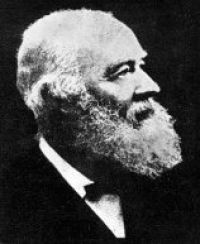
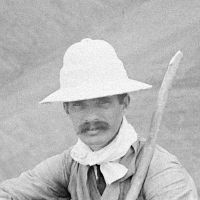
Portrait of John Smith Flett John Smith Flett,  1911 Encyclopædia Britannica (1911)

“ Transitional forms between syenite and granite are common as these rocks very frequently occur in the same mass and can hardly be separated from one another in the field. These syenites, comparatively rich in quartz, have been called syenite-granites. Many of the rocks known to the older geologists and shown on the early maps as “syenite" are of this type; others are hornblendic granites in which quartz is not abundant or conspicuous. Another variety of quartzsyenite, very rich in pink alkali felspar (microperthite) , is known as nordmarkite ”
Source: Wikisource

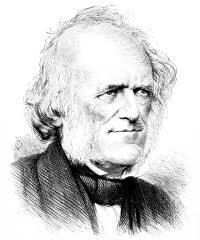
Portrait of Archibald Geikie Archibald Geikie,  The Story of a Boulder; or, Gleanings from the Note-book of a Field Geologist

“ Huge blocks of syenite—a granitic rock of which the upper part of the mountain entirely consists—cumber the soil in every direction, and gradually increase in numbers till the furze can scarcely find a nestling-place, and is at last choked altogether. Then comes a scene of utter desolation. Grey masses of rock of every form and size are piled upon each other in endless confusion. ”
Source: Gutenberg

John MacCulloch,  Sketch of the Mineralogy of Sky… (1816)

“ But if, as in this instance, the trap vein, which we know to hold in all cases an unchecked progress through opposing rocks, is cut off by the unstratified rock, the syenite, it is plain that the stratified rock which that vein traverses has also been broken by it, and that the syenite in this particular case is posterior to the limestone, and of course to all that body of rock which precedes it. ”
Source: Wikisource

Get perspective with Kwize: daily news enlightened by great literature