Orthoclase

Definition and stakes

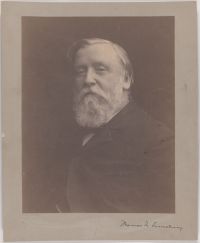
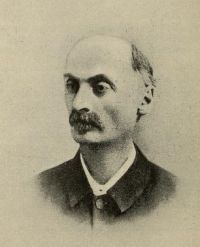
Portrait of Archibald Geikie Archibald Geikie,  The Ancient Volcanoes of Great Britain… (1897)

“ I will only say that the rock is unquestionably a granite, with no essential differences from many other bosses regarding which there has been no controversy. It is a holocrystalline rock with a thoroughly granitic texture, and composed of the ordinary minerals of granite—quartz, orthoclase and plagioclase, among which a green chloritic mineral, more or less plentiful, probably represents original hornblende, biotite or augite. Sometimes the quartz and felspar in the body of the rock show a micropegmatitic arrangement, and the same structure occurs in veins that traverse it. ”
Source: Gutenberg

R. G. Latham,  A Handbook of the English Language

“ Orthography is less essential to language than orthoepy; since all languages are spoken, whilst but a few languages are written. Orthography presupposes orthoepy. Orthography addresses itself to the eye, orthoepy to the ear. Orthoepy deals with the articulate sounds that constitute syllables and words; orthography treats of the signs by which such articulate sounds are expressed in writing. A letter is the sign of an articulate (and, in the case of h, of an inarticulate) sound.
§ 143. A full and perfect system of orthography consists in two things:—1.
”
Source: Gutenberg

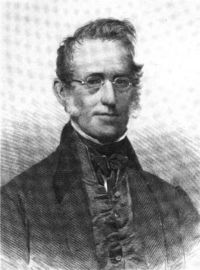
Portrait of William Dana Orcutt William Dana Orcutt,  The Writer's Desk Book

“ A word should be divided in accordance with its natural division in correct pronunciation, rather than according to derivation: e.g., knowl-edge, not know-ledge; but divide according to meaning and derivation as far as is compatible with good spacing and pronunciation: e.g., dis-pleasure, not displeas-ure.
3. A single consonant between two vowels should be joined with the first vowel if short, but with the latter if long: e.g., riv-er, ri-val; but avoid dividing words as short as these if possible.
”
Source: Gutenberg

Get perspective with Kwize: daily news enlightened by great literature